Secondary suspension for rail vehicles - from hourglass springs to air spring Systems
The secondary spring is located between the bogie and the car body, usually above the bogie frame, and elastically connects the bogie to the vehicle body. Its main function is to isolate the vehicle frame from shocks, track irregularities and vibrations, thereby significantly improving ride comfort. It ensures that the car body remains largely stable - even at higher speeds or on poor track conditions. In addition to enhancing comfort, the secondary suspension contributes significantly to vehicle stability, safety and the reduction of dynamic loads on the car body. This not only improves ride smoothness but also extends the service life of vehicle components.
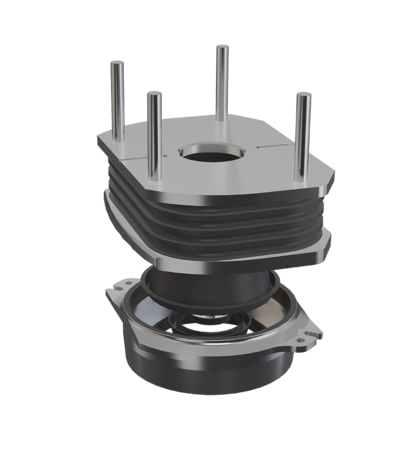
Secondary Spring Element (Hourglass Spring)
An hourglass spring is a special spring element with a tapered shape toward the center that is primarily used in the secondary suspension of railway vehicles. Thanks to its geometry, it exhibits nonlinear spring behavior and contributes to high ride comfort, a smooth ride and a durable, low-maintenance suspension system.
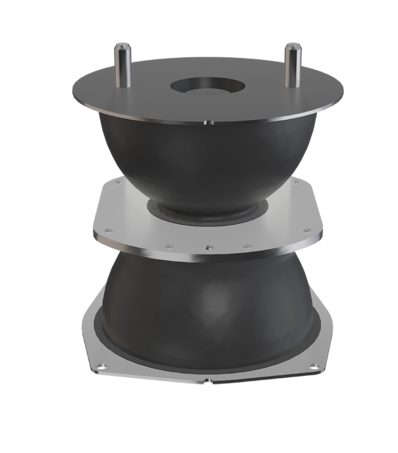
Conventional Secondary Suspension System
Secondary suspension systems without air springs use mechanical or elastomer-based elements, such as conical and laminated springs, to provide elastic support for the car body relative to the bogie. Such systems are characterized by exceptional robustness, are maintenance-free and are suitable for vehicle designs with limited installation space.
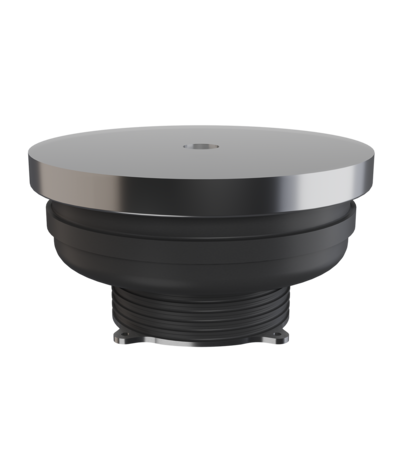
Air Spring System
Air spring systems are frequently used in the secondary suspension stage because they offer a high level of comfort and enable a constant floor or entry height. These air springs are often supplemented by additional or emergency springs—such as elastomer springs, steel springs or laminated springs—which provide additional stability or redundancy and support the system’s function and performance.