
Support rail
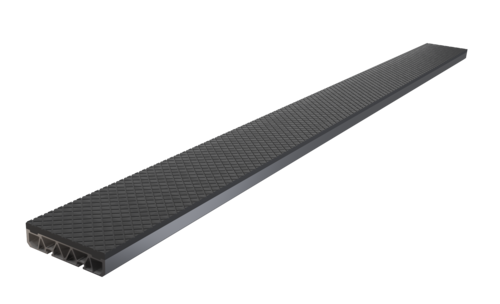
A rubber-and-metal support rail used in the commercial vehicle sector - for example, in dump trucks or semi-trailers - serves as a flexible, low-wear support between the dump body and the vehicle frame or as a support for the load being transported. It combines a sturdy metal profile with a cushioning rubber layer that reduces vibrations, shocks and noise and prevents metal-to-metal contact.
Area of application
The rubber-and-metal support rail is typically used in the commercial vehicle sector in applications where a body - such as a dump body, a container or a loading platform - needs to rest on the vehicle frame in a way that is both flexible and quiet. Installation takes place primarily between the body and the chassis or subframe, often along the side longitudinal beams. The support rail serves to dampen shocks, vibrations and harsh load changes during loading, tipping or off-road driving, and to prevent metal-to-metal contact. It also helps support heavy loads when transporting heavy equipment on a trailer.
Technical details
A rubber-and-metal mounting rail in the commercial vehicle sector typically consists of a robust metal profile or metal rail combined with a permanently vulcanized or applied rubber layer. The metal ensures high stability and a form-fit connection to the vehicle frame, while the elastic rubber effectively dampens shocks, vibrations and structure-borne noise. The protective rubber pad prevents metal-to-metal contact, reduces wear on the frame and body and ensures even load distribution across the entire contact surface.
Characteristics
The rubber-and-metal mounting rail used in the commercial vehicle sector consists of a metal profile or rail and a vulcanized rubber layer. The metal ensures high stability and a form-fit connection to the vehicle frame, while the elastic rubber effectively dampens shocks, vibrations and structure-borne noise. The protective rubber lining prevents metal-to-metal contact, reduces wear on the frame and body and ensures even load distribution across the entire contact surface. Thanks to this combination of materials, the support rail is particularly durable, temperature- and weather-resistant and ideally suited for heavy-duty commercial vehicles such as dump trucks or construction vehicles.