
Control Spring
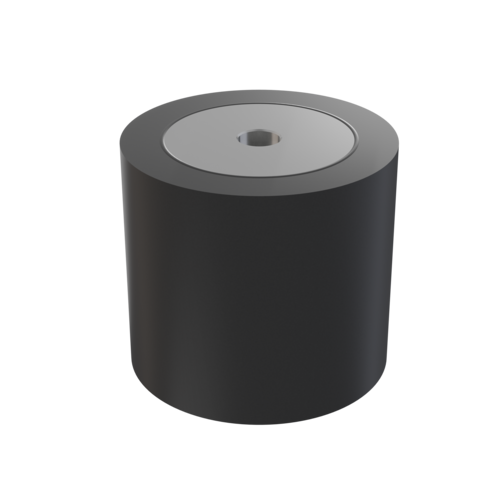
Rubber-metal control springs are elastic structural components that specifically absorb horizontal forces while allowing for defined movements of the bridge superstructure. They combine a flexible rubber core with metal reinforcement plates, which allows them to control deformation, transfer lateral forces and protect the structure from overloads. They thus serve as force-transferring elements for the safe and durable support of bridges.
Area of application
Rubber-to-metal bonded control springs are primarily used in road and railway bridges to transmit horizontal forces and guide movements in a controlled manner. They are typically installed on piers, abutments and in areas with specific displacement and rotation requirements, particularly in structures subject to high shear forces and dynamic loads.
Technical details
Control springs consist of an elastic rubber core combined with embedded steel plates or metal reinforcements. This design enables controlled force transmission - in particular, the absorption and transfer of horizontal forces - while simultaneously allowing for defined displacements and rotations of the superstructure. The elastic behavior provides vibration damping, controlled deformation and relief for adjacent components. Control bearings thus protect the bridge structure from excessive stresses and ensure a long-lasting, low-maintenance bearing function.
Characteristics
Rubber-to-metal bonded control springs provide a high capacity to absorb horizontal forces, precise motion control and effective vibration damping. Thanks to their elastic rubber-metal construction, they offer high dimensional stability, controlled deformability and good durability. They ensure reliable force transmission, reduce stresses in the supporting structure and enable long-lasting, low-maintenance bridge bearings.