
IS Element
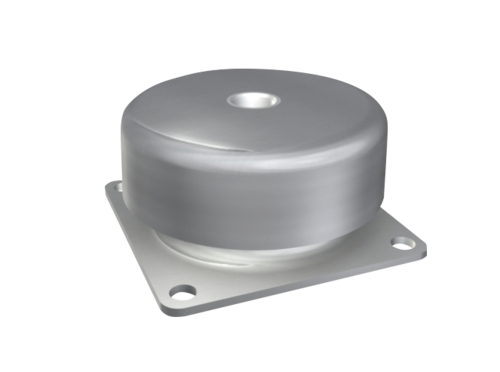
IS rubber-metal elements are elastic mounting elements for mechanical engineering and plant construction. By combining rubber and metal, they provide vibration- and noise-damping mounts for machines, units and structures. They reduce the transmission of vibrations and shocks, compensate for minor movements and help increase operational safety and protect components. Typical applications include machine foundations, drives, pumps, compressors and plant components.
Area of application
A typical application of IS elements as mounting elements is the elastic mounting of machines and units, such as pumps, motors and compressors. They are also used for vibration isolation in drives and conveyor systems. Other areas of application include machine frames and housings, control cabinets and assemblies, as well as components requiring sensitive mounting where vibrations and structure-borne noise need to be reduced.
Technical details
IS elements used as mounting elements typically consist of a rubber-metal combination, in which an elastic rubber body is connected to metal parts or threaded elements. The rubber absorbs vibrations and shocks, while the metal parts ensure dimensional stability and force absorption. Key technical details include defined stiffness values tailored to specific load and frequency ranges. IS elements are designed to absorb static and dynamic loads and effectively reduce structure-borne noise. Depending on the design, they also offer resistance to temperature, oil and various media, as well as limited compensation capabilities for misalignment.
Characteristics
Rubber and metal IS elements are characterized by a defined elastic stiffness that is specifically tailored to the load, vibration frequency and application. They provide a high damping effect to reduce vibrations, shocks and structure-borne noise. Thanks to their metal components, they offer high load-bearing capacity and dimensional stability while providing elastic mounting. In addition, they possess a defined strength and, depending on the rubber compound, resistance to temperature, oils and environmental influences.