
Traction system: Transmission of drive power on the tracks
A traction system in a bogie is the central component that transmits a railway vehicle’s drive power to the track. It comprises all of the components that generate, transmit, regulate and transfer torque to the track. Through the combination of mechanical components, electric motors, gearboxes, spring stages and damping systems the traction system becomes a heavy-duty drive platform. As elastic rubber-metal elements, the traction system typically includes the center pivot bearing, the longitudinal rods and various types of buffers.
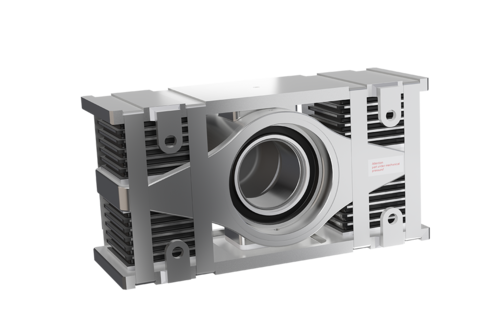
Area of application
Traction systems are used in the bogies of various railway vehicles, including locomotives, railcars, subways, trams and freight vehicles with powered axles. They perform a variety of key functions that are essential to a vehicle’s operation. Among their main functions is the reliable transmission of power from the motor to the wheel, with the necessary torque adjusted via a transmission. In addition, they enable the actual propulsion of the vehicle and contribute significantly to acceleration, climbing ability and speed. At the same time, these systems ensure precise guidance of the vehicle on the track - particularly when navigating curves and varying track conditions - to guarantee stability and a smooth ride. In addition, they reduce vibrations and shocks, thereby protecting the engine, transmission and wheel sets and extending their service life.
Technical details
A traction system in a bogie consists of a motor, transmission, wheel set, suspension, and braking systems - its function is significantly influenced by numerous rubber-metal components that ensure power transmission, guidance, and vibration isolation. Of particular importance is the pivot bearing, which serves as the central connecting element between the car body and the bogie. It allows for limited relative movement while simultaneously transmitting significant forces. Equally important are the longitudinal drive links, which use elastic rubber-metal bearings to transmit longitudinal forces - such as braking and traction forces - between the bogie and the car body. At the same time, they isolate vibrations and reduce noise, thereby increasing the comfort and service life of the bogie components.
Characteristics
Rubber-metal components play a central role in the traction system, as they elastically transmit forces, guide movements, and effectively dampen vibrations and shocks at the same time. Elements such as longitudinal drive shafts, rubber-mounted guide elements and pivot bearings enable a controlled flow of force between the bogie and the car body and reduce material fatigue. Thanks to their pronounced inherent damping, rubber-metal components isolate vibrations caused by track irregularities, starting torques or braking maneuvers, thereby enhancing both ride smoothness and comfort. The pivot bearings enable the necessary freedom of movement for the bogie, such as when swinging out in curves. Rubber-metal longitudinal drive shafts transmit braking and drive forces with minimal shock, thereby protecting the traction components. The elastic structure also reduces noise, decouples structure-borne noise and protects sensitive components such as the engine, transmission or brake components from dynamic loads. Since rubber-metal elements are resistant to dirt, weather and temperature, they operate maintenance-free and increase the reliability and service life of the entire traction system.