
Pivot Bearing
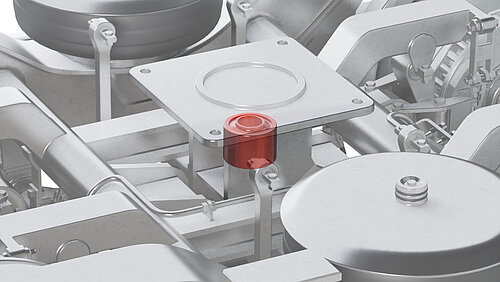
The (center) pivot bearing is a central component of the connection between the vehicle frame (car body) and the bogie in railway vehicles. It plays a key role in power transmission and the vehicle’s dynamic behavior. The rubber-metal element, as a component of the pivot bearing, serves to elastically connect the car body and the bogie, dampen vibrations and improve the ride quality of rail vehicles. It offers advantages in terms of comfort, dynamics, wear and service life.
Area of application
The pivot bearing with an integrated rubber-metal element is used in railway vehicles that require a balanced combination of power transmission, comfort and dynamic handling. Typical applications include passenger cars for regional and long-distance service, various types of multiple-unit trains and trams. The bearing connects the car body to the bogie and enables its controlled rotational movement when cornering while the rubber-metal element additionally provides a flexible and vibration-isolating coupling. This significantly reduces vibrations and shocks, which not only enhances ride comfort but also effectively protects the car body from dynamic loads.
Technical details
The pivot bearing with a rubber-metal element connects the car body to the pivot cup integrated into the bogie via the pivot pin. Sliding or friction elements ensure smooth, low-wear rotational movement of the bogie when negotiating curves. The central rubber-metal element can be designed as a bushing, a ring spring or a compound spring. This elastic mounting allows for limited relative movement between the car body and the bogie while simultaneously filtering out shocks and vibrations. Thanks to the defined stiffness of the specially adapted elastomer, horizontal and vertical forces are transmitted in a controlled manner and the vehicle’s yaw stiffness is specifically influenced. The system thus combines robust mechanical force transmission with effective damping and improved ride quality.
Characteristics
The pivot bearing with a rubber-metal element is characterized by a combination of high load-carrying capacity, elastic mounting and effective damping. The elastomer layer significantly reduces shocks, oscillations and high-frequency vibrations, thereby improving both ride comfort and the vehicle’s smoothness. At the same time, the rubber’s defined stiffness ensures that horizontal and vertical forces are reliably transmitted and that movements are permitted only to a controlled extent. Of particular importance here is the targeted control of yaw stiffness, which supports stable straight-line stability and smooth cornering behavior. The bearing is maintenance-free and, when properly designed, has a long service life. Overall, the system combines robust force transmission with a noticeable reduction in wear, noise and dynamic loads.
Variants
Pivot bushing
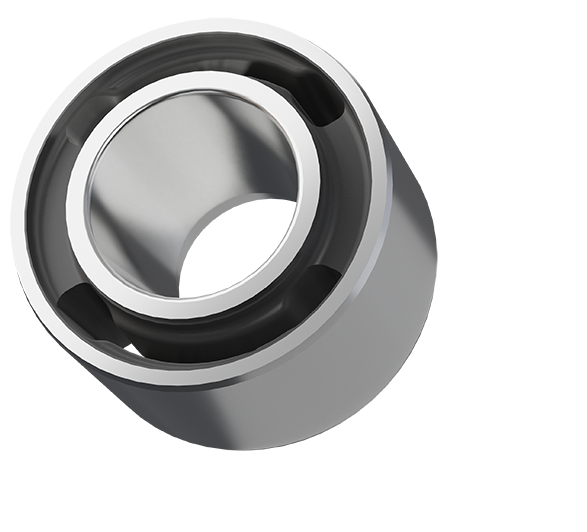
The rubber-and-metal pivot bushing is a key elastic bearing component in the pivot bearing system of railway vehicles. It connects the pivot pin of the car body to the pivot cup in the bogie and ensures precise yet damped force transmission. Thanks to its construction - consisting of an inner metal core, an outer sleeve, and a vulcanized elastomer layer - the bushing allows for controlled elastic movement in multiple directions. As a result, it effectively reduces vibrations, structure-borne noise and shock loads, stabilizes ride behavior and supports optimal yaw stiffness. The rubber-metal bushing contributes to greater ride comfort, reduced wear and a significantly longer service life for the entire pivot bearing assembly.
Ring spring
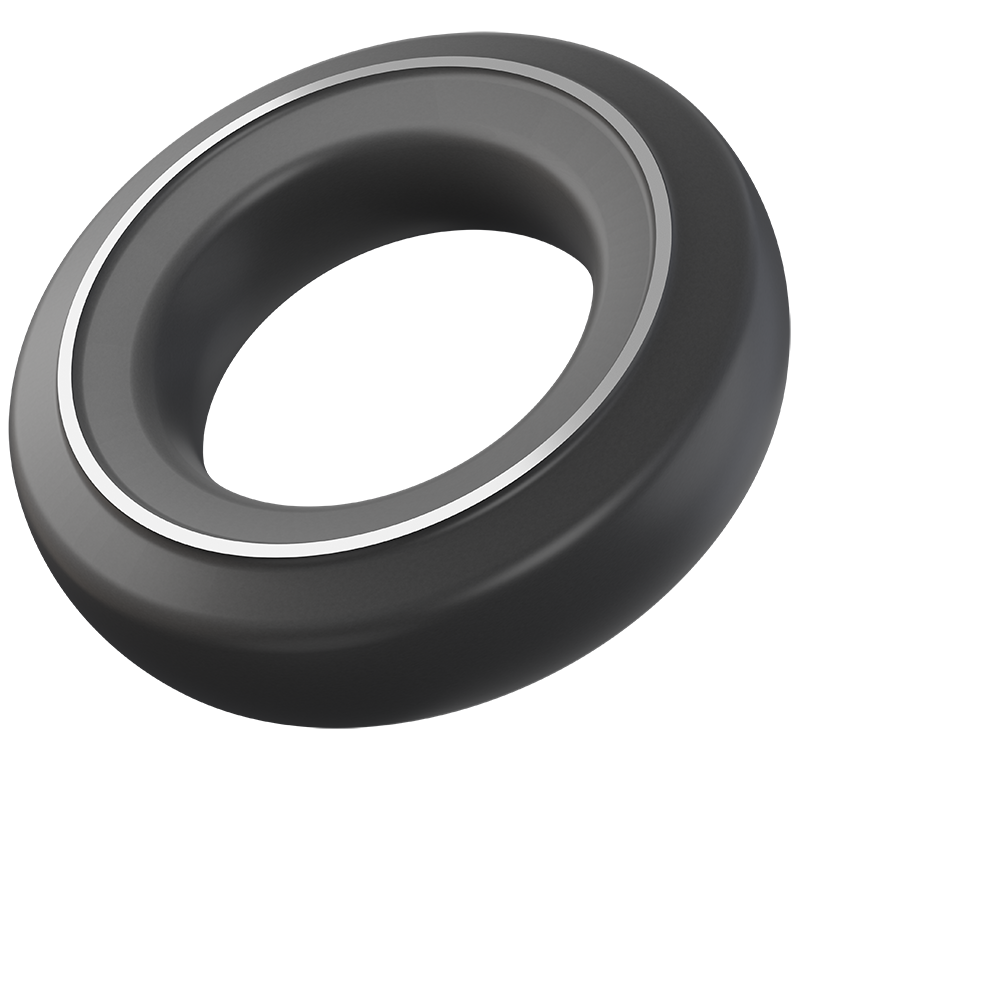
The rubber-metal ring spring in the pivot bearing is a key elastic connecting element between the car body and the bogie of railway vehicles. It provides precise yet damped force transmission and ensures that rotational movements, lateral forces and impacts are absorbed in a controlled manner. Thanks to its annular design, consisting of a metal ring and a vulcanized elastomer body, the ring spring offers defined spring and damping characteristics that improve ride quality. It reduces vibrations and structure-borne noise, stabilizes the bogie’s yaw motion and contributes significantly to smooth straight-line running and harmonious cornering behavior. Thanks to its high load-bearing capacity and effective vibration isolation, the rubber-metal ring spring is considered a reliable solution for demanding operating conditions in regional, long-distance and urban transit. It enhances ride comfort, reduces wear and extends the service life of the entire pivot bearing.
Compound spring
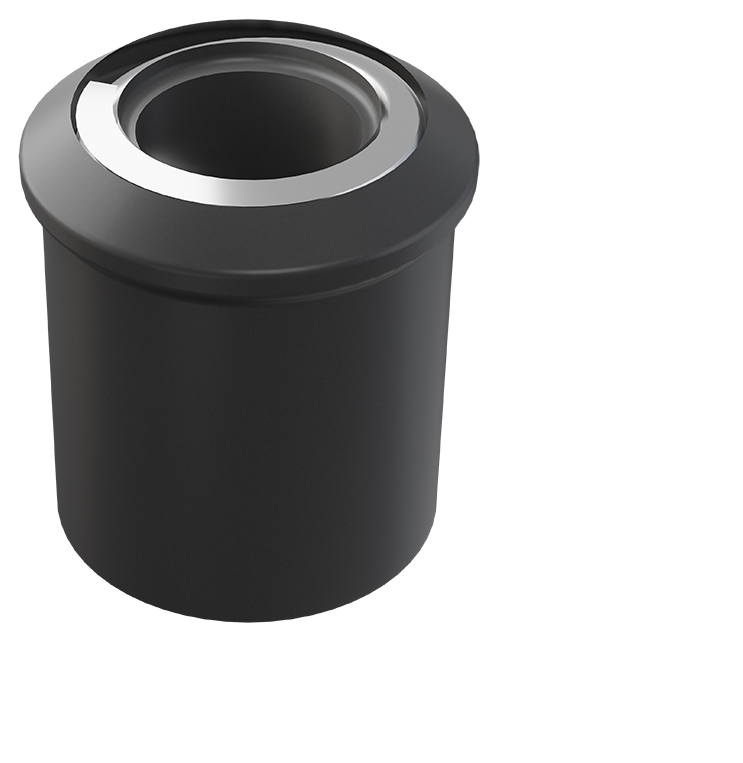
The rubber-metal compound spring with an internal coil spring is a highly effective elastic mounting component in the pivot bearing of railway vehicles; it ensures a precise yet damped connection between the car body and the bogie. It combines a robust rubber spring with an internally integrated steel coil spring, thereby achieving an optimal balance of spring force, damping and vibration isolation. The elastomer elastically absorbs horizontal and torsional movements, while the coil spring reliably supports particularly high vertical loads. Through this combination, the compound spring enables defined force transmission, reduces vibrations and structure-borne noise and improves both the straight-line stability and cornering performance of the bogie. At the same time, it protects the car body from impacts and dynamic loads, which significantly increases ride comfort and minimizes wear. Thanks to its high load-bearing capacity and progressive spring characteristic curve, the rubber-metal compound spring is considered a suitable solution for regional trains, long-distance trains, railcars and light rail systems. It contributes significantly to the smooth running, safety, and durability of the entire pivot bearing.