
Axle Bearing
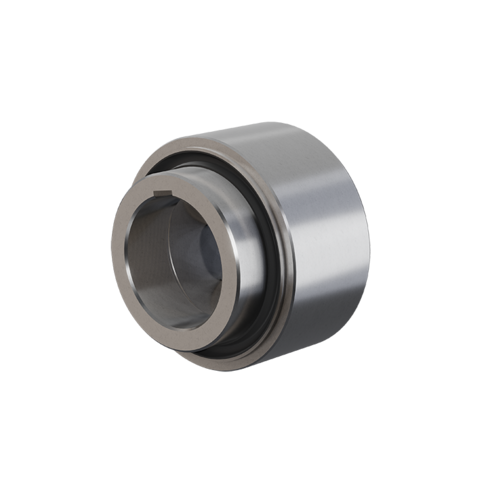
The axle bearing in a construction machine or agricultural equipment is designed to support the axles so that they rotate safely, with proper guidance and with minimal friction, while absorbing high radial and axial forces and reliably transferring them to the machine structure. The axle bearing ensures that these forces do not act directly on the rotating axle or other sensitive components, but are instead distributed and supported. Various versions of rubber-metal components are used for this purpose.
Area of application
Axle bearings in off-highway machinery are used in vehicles and equipment that operate under particularly demanding conditions off paved roads. High loads, severe shocks, uneven terrain and varying loads characterize their operating environment and place significantly higher demands on them than in the traditional on-road vehicle sector. In this context, axle bearings not only facilitate the pure rotational movement of axles but also play a central role in supporting drive and oscillating axles, as well as in connecting the axle to the vehicle frame. They specifically enable relative movements, absorb forces generated during driving and operation and ensure that the axle can follow the movements of the ground without placing excessive stress on the machine’s structure.
Technical details
An axle bearing in off-highway machinery is technically designed to safely absorb very high radial and axial forces while accommodating only minimal rotational or swivel movements. Typically, this involves a robust metallic bearing structure that transfers loads to the axle housing or frame, combined with integrated rubber-metal components. These elastic elements are firmly bonded to the metal components and provide a defined degree of flexibility in the force transmission path. They compensate for axle misalignment, tolerances and angular errors while simultaneously reducing shock and vibration loads. This cushions load peaks, protects adjacent components and reduces maintenance requirements. Overall, the axle bearing thus combines load-bearing, guiding and damping functions in a compact component optimized for extreme operating conditions.
Characteristics
A dedicated, specially designed axle bearing for off-highway applications offers the advantage of being optimally tailored to the extreme operating conditions of the respective machine. Through the targeted use of rubber-metal components, high loads can not only be safely transmitted but also elastically cushioned. Shocks, vibrations and load spikes caused by uneven terrain are effectively dampened, thereby providing long-term protection for the frame, axle components and drivetrain. At the same time, the elastic elements compensate for axle misalignment, tolerances and angular errors without generating unwanted constraint forces. The result is a robust, low-maintenance bearing assembly with a longer service life, greater operational reliability and improved driving and working comfort - a clear functional and economic advantage over standardized bearing solutions.
Variants
Axle control rod
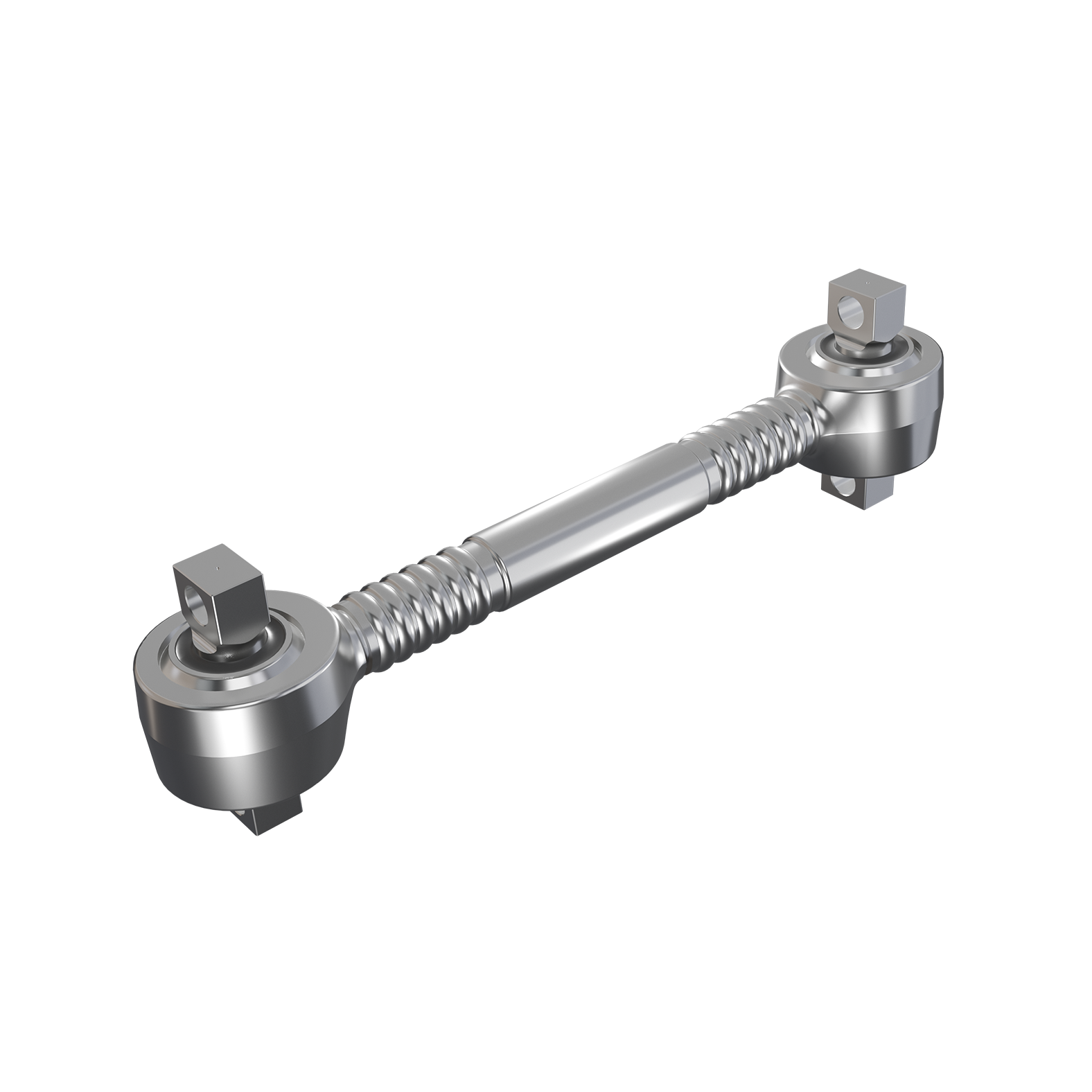
Axle rods are used for the precise guidance and support of axles or axle components. They consist of a sturdy metal structure that is integrated via elastic bearing elements such as rubber-metal bushings or ball joints. These elements enable defined movements, transmit forces and reduce vibrations. Bushings absorb radial, axial and torsional forces and compensate for movements and tolerances, while ball joints allow for larger angles of movement and backlash-free force transmission. They are used wherever axles or components must be guided precisely, such as in conveyor technology, undercarriages, mobile units or rail-guided systems. The flexible mounting reduces vibrations and noise and ensures stable, smooth movements as well as increased operational reliability. An axle rod consists of a metal support arm connected via rubber-metal bearings. These dampen shocks, absorb forces and allow for limited movement, while the support arm provides stability. Ball joints are used for applications requiring greater range of motion. Both types of bearings ensure precise yet flexible guidance. Axle rods with bushings or ball joints reliably transmit forces and provide a stable, durable and low-maintenance connection. While bushings dampen vibrations and compensate for tolerances, ball joints enable direct and precise force transmission.
Axle bearing
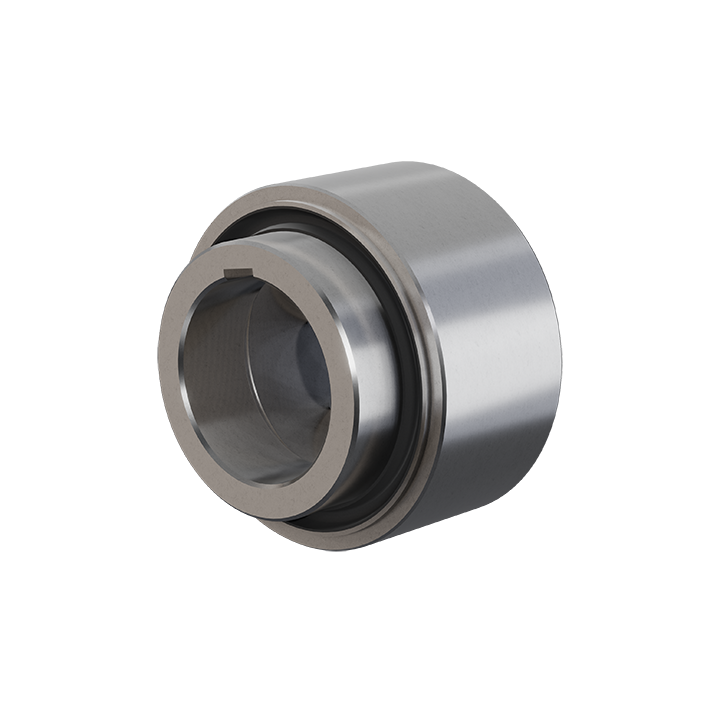
A rubber-metal bushing used as an axle bearing is employed in the off-highway sector - for example, in construction and agricultural machinery - to provide a flexible connection between the axle and the frame. It consists of a rubber body bonded to metal, allows for limited rotational and tilting movements and dampens shocks, vibrations and load spikes. It is used wherever axles and chassis components are subjected to high loads and movements. In doing so, it allows for controlled relative movements, compensates for axle misalignment and tolerances and reduces vibrations. This protects the machine structure and increases service life and operational reliability. The bushing consists of an inner and outer metal sleeve with vulcanized rubber. The rubber absorbs elastic deformation, allows for movement and acts as a damping element, while the metal parts ensure reliable force transmission. It is characterized by robust, elastic absorption of high loads, effective damping and compensation for angular misalignment. Thanks to its low-wear design, it is generally maintenance-free, insensitive to environmental influences and contributes to the long service life of machines.
Laminated spring
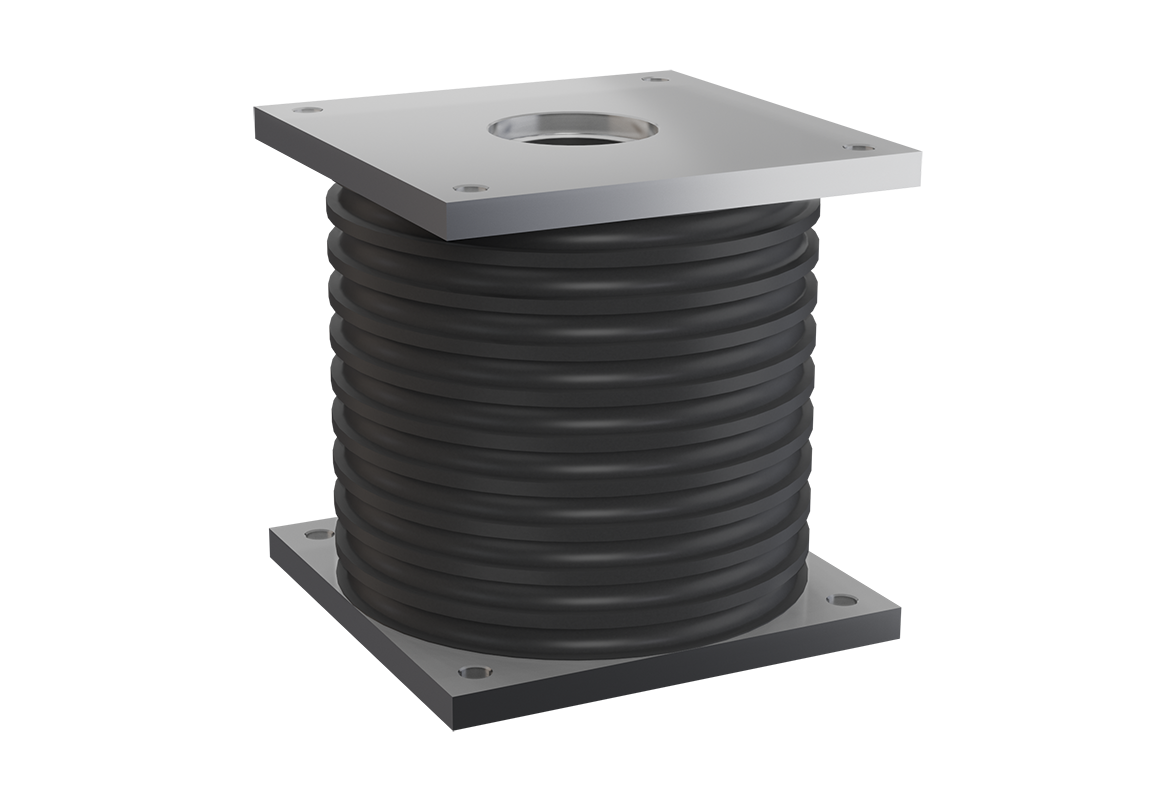
A laminated spring is an elastic spring element consisting of multiple elastomer layers with metallic inserts, allowing for precise adjustment of stiffness and performance characteristics. It operates in both shear and compression directions and is used for elastic mounting, vibration isolation and controlled force transmission. It is used in construction machinery to mount engines, hydraulic power units and cabs, and protects against vibrations and impacts. It also provides damping in undercarriages, axle suspensions and attachments, increasing comfort and improving reliability. Its function is based on the elastic deformation of the rubber layers and force transmission via the metal inserts. The layer structure, material, geometry and installation conditions determine the spring characteristic curve, performance and service life. Laminated springs provide a defined spring effect, operate quietly and require no lubrication. They enable compact designs, good vibration isolation and, depending on their design, are resistant to environmental influences.
Angular contact bearing
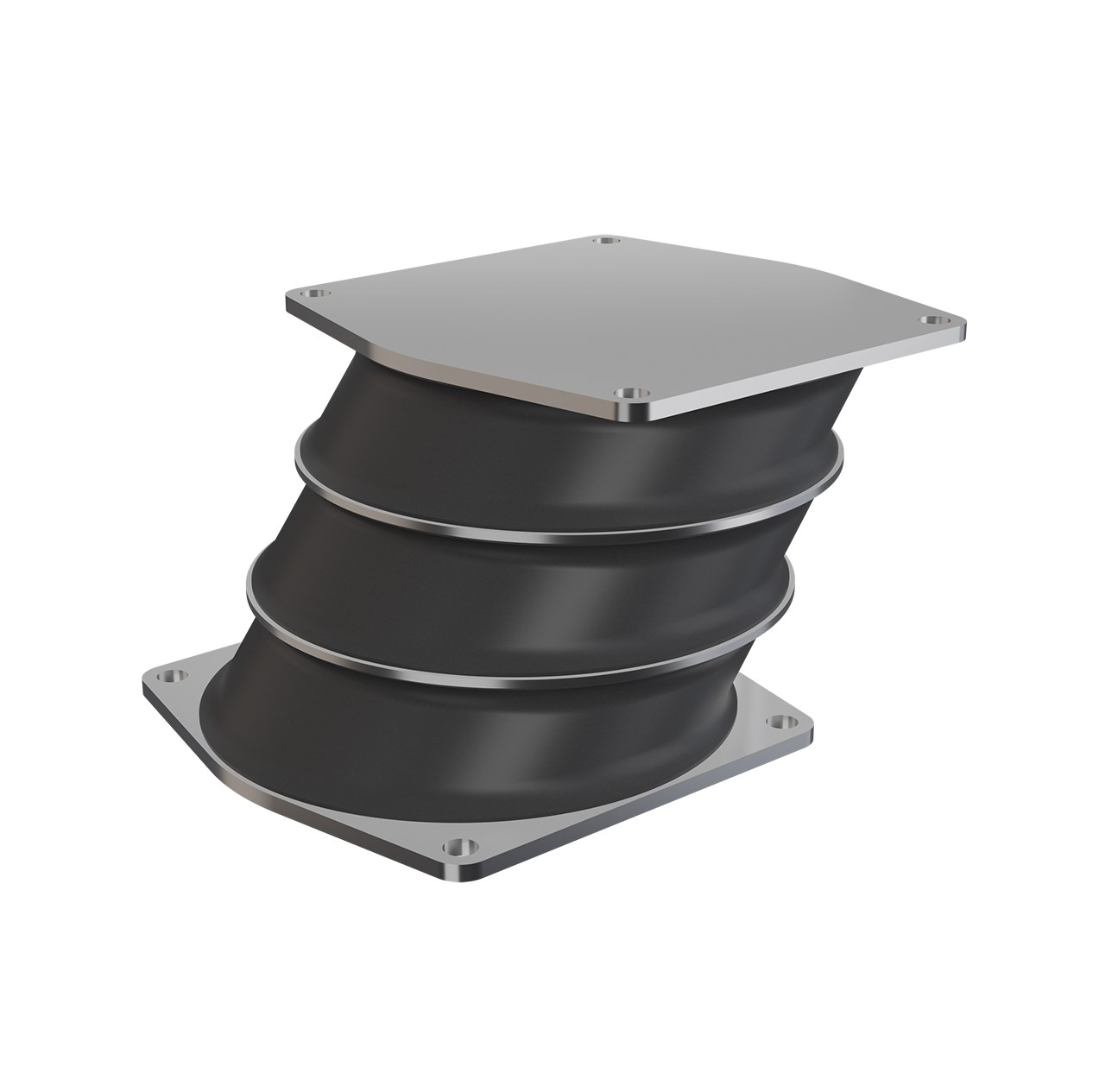
Angular bearings used as axle bearings are rubber-metal components that provide elastic and load-bearing support for axles. The angled arrangement of the elastomer allows forces and movements to be absorbed at defined angles, thereby damping vibrations and ensuring stable power transmission. They are used in vehicles and machines where axles or control arms must be mounted at an angle, such as in suspension or guidance systems. In these applications, they can simultaneously absorb compressive, transverse, and oblique forces, control movement, reduce vibrations and protect components from peak loads. An oblique bearing consists of inner and outer metal parts with an obliquely arranged elastomer layer. This layer allows for deformation in multiple directions and provides damping, while the metal parts ensure stability and secure fastening. The design and material are adapted to the load and operating conditions. Angular bearings offer high mobility, good damping and stable force absorption. They reduce noise, are low-maintenance and wear-resistant and contribute to precise shaft guidance, smooth operation and high operational reliability.