
Support Buffer
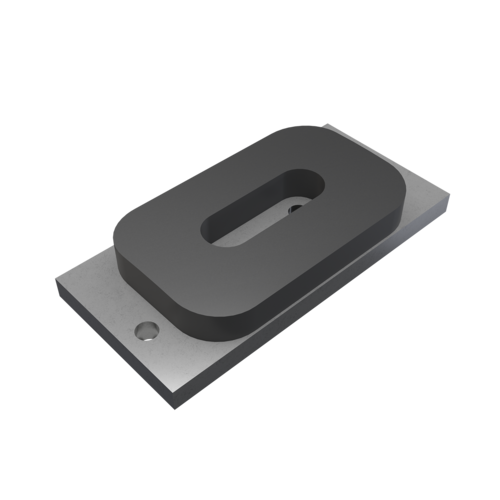
Support buffers are elastic damping elements designed to support components - reducing vibration and absorbing shock - or to separate them from one another. They are made of an elastic material such as rubber and are used as stop, support or mounting points. Thanks to their damping effect, support buffers protect structures from direct impact loads, compensate for unevenness and provide a support surface that is gentle on the material.
Area of application
Support buffers are used in a wide variety of technical applications - anywhere components need to be supported elastically or movements need to be gently absorbed. Typical areas of application include mechanical and plant engineering, transportation technology, conveyor systems, automotive manufacturing and assembly equipment. They often serve as a spacer between metal surfaces, as a soft support for sensitive components or as an end stop to limit movement. In dynamic applications, they dampen shocks and vibrations, while in static applications they define support points and reduce noise transmission.
Technical details
Support buffers are typically made of vulcanized elastomer in combination with an integrated metal component such as a threaded sleeve or mounting plate. The material composition and hardness of the rubber are selected based on the specific load conditions to achieve the desired damping, spring and load-bearing effects. Depending on the design, support buffers can be cylindrical, conical, rectangular or specially shaped. They are capable of absorbing vertical loads and partially elastically compensating for horizontal forces. Additionally, variants with abrasion or oil resistance, increased temperature resistance or reinforced mounting surfaces can be used if the application requires it.
Characteristics
Support buffers are characterized by high elasticity, good shock absorption and long-lasting mechanical stability. They absorb energy under load, reduce vibrations and prevent direct collisions between components. Their elastic behavior enables even load distribution and protects adjacent components. Support buffers dampen loads, reduce vibrations and ensure stable, low-noise mounting of machines and components.