
Machine base
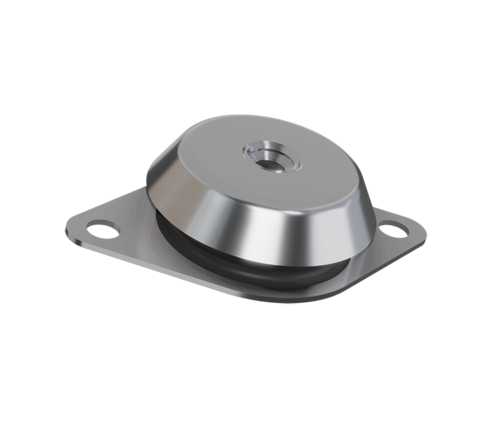
Rubber and metal machine feet are used to securely position machines and optimize their operation. Machine feet are primarily used to dampen vibrations and reduce noise. They decouple the machine from the surface it stands on, protect sensitive floors and prevent the machine from slipping.
Area of application
Rubber and metal machine feet are used wherever vibration and noise damping are a priority. Typical applications include machines and equipment such as laboratory equipment, packaging machines, air conditioning systems, ventilation units, pumps and household and commercial appliances. In general mechanical and plant engineering, as well as in sensitive environments such as offices, laboratories or production areas with high requirements for quiet operation, machine feet are used because they protect the floor surface and prevent slipping.
Technical details
Rubber and metal machine feet combine the advantages of both materials in a single component. The load-bearing metal parts, made of standard or stainless steel, ensure high stability and load-bearing capacity and reliably absorb both static and dynamic loads. This makes these machine feet suitable even for heavy machinery and continuous industrial loads. A vulcanized rubber body is bonded to the metal body, which dampens oscillations and vibrations, reduces noise and prevents direct transmission to the floor. The rubber also provides slip resistance and protects the floor. The choice of elastomer influences properties such as elasticity, damping and resistance to oil and chemicals. Depending on the specification, rubber-and-metal machine feet feature height adjustability via a threaded spindle or screw bolt, allowing for the compensation of floor unevenness and the precise leveling of machines. A sufficiently large contact surface supports even load distribution and stability. Overall, rubber-metal machine feet offer a robust and versatile solution for machine and plant engineering.
Characteristics
Rubber and metal machine feet are designed to securely position machines and stabilize their operation. Another important function is the damping of oscillations and vibrations. Rubber has naturally elastic properties and effectively reduces vibrations and noise. In accordance with specifications, machine feet can be designed to be height-adjustable. They are usually equipped with threaded spindles and allow for precise leveling of the machine. In addition, material resistance, contact area with the floor, slip resistance and the type of fastening are crucial technical details that determine whether a machine foot made of rubber or a combination of rubber and metal is suitable for the specific application.