
Bush: central elastic mounting component
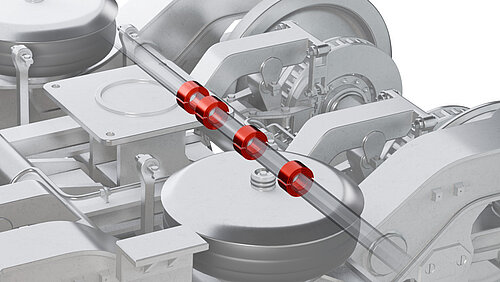
Bushes and bearings made of rubber and metal or rubber-plastic composites are key elastic mounting components in railway vehicle construction. They connect bogie and car body components to one another and allow for controlled relative movements while effectively damping forces and vibrations. Thanks to their rubber-metal or rubber-plastic composite construction, they provide a defined level of stiffness in multiple directions, reduce noise and protect the vehicle structure from dynamic loads.
Area of application
Bushes and bearings made of rubber and metal or rubber-plastic composites are among the key elastic bearing components in railway vehicle manufacturing. They are used in bogies, traction rods, anti roll bars, spring stages, and mounting elements to allow for elastic relative movement between components while simultaneously transmitting forces in a controlled manner. Their range of applications extends from high-speed trains to regional and commuter railway vehicles, as well as freight cars and trams. Thanks to their damping and guiding properties, they make a decisive contribution to the vehicle’s smooth ride, comfort, noise reduction and structural durability.
Technical details
Bushings and silent bearings consist of a form-fit assembly in which the elastomer is vulcanized between the inner and outer sleeves or bonded to one of the two supporting components. This design enables a defined stiffness across multiple degrees of freedom: Radially elastic, axially limited in stiffness, and torsionally controlled to allow for flexibility. The elastomer compounds are formulated to withstand high dynamic loads, absorb vibration energy, and operate reliably over a wide temperature range. By adjusting hardness, geometry, preload and material formulation, the bearings and bushes can be precisely tailored to vehicle-specific requirements. These components are specifically optimized to reduce structure-borne noise and vibrations.
Characteristics
Rubber and metal bushings and bearings are characterized by a combination of elasticity, damping, and structural robustness. They reduce vibrations and noise, protect adjacent components from fatigue, improve suspension control and contribute to a stable, comfortable ride. At the same time, they are maintenance-free and offer a long service life. Their compact design, high load-bearing capacity and the ability to be precisely tuned make them key components in suspension technology.
Variants
Anti-roll bush
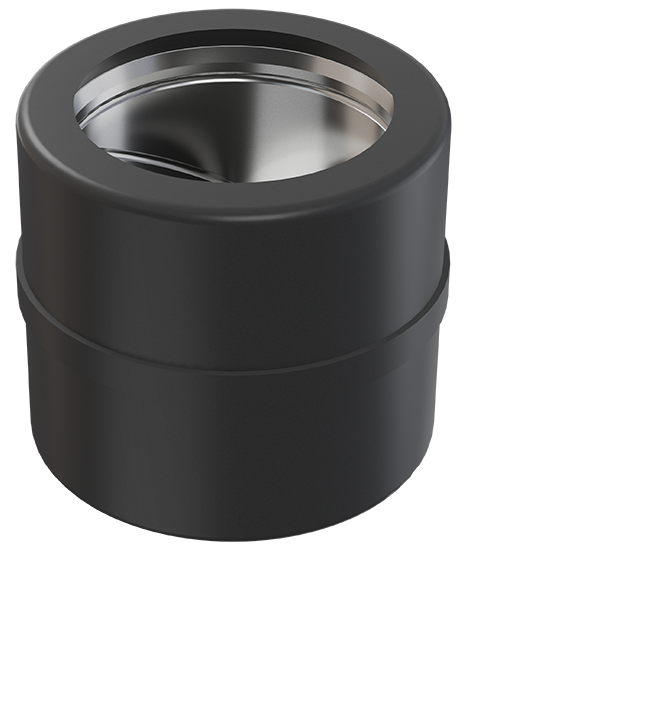
Anti-roll bushes made of rubber and metal or rubber-plastic composites are important components of the secondary suspension system in railway vehicles. They limit the roll movements of the car body relative to the bogie while simultaneously allowing for defined elastic movements. They are used, among other things, in high-speed trains, regional railway vehicles and streetcars, they contribute significantly to stability, comfort and safety. By absorbing torsional and lateral forces, they stabilize the vehicle, particularly when cornering, in crosswinds or under uneven loading. Their design allows for varying degrees of stiffness: Soft in torsion for controlled roll movement but stiff in the lateral and longitudinal directions for precise guidance. The elastomers are designed for high load-bearing capacity, temperature resistance and a long service life. Anti-roll bushes reduce roll movements, improve ride smoothness and protect the vehicle structure from load spikes. They operate with virtually no maintenance, are robustly constructed and can be easily adapted to different vehicle requirements.
Handlebar bushing
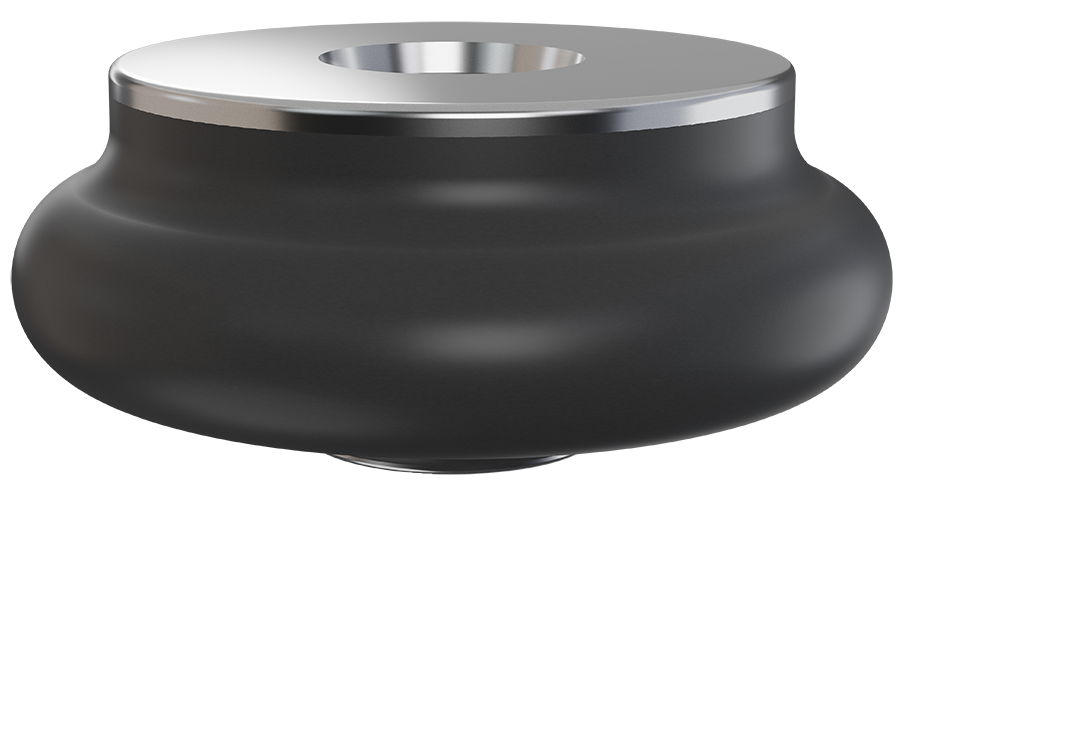
Rubber and metal steering bushings are key components of the running gear technology in rail vehicles. As elastic mounting points in steering links and stabilizer struts, they enable controlled relative movements between the bogie and the car body and elastically absorb lateral, longitudinal, and torsional forces. Thanks to their damping properties, they contribute significantly to a smooth ride, comfort, and operational safety, and are used in nearly all vehicle categories. Technically, they consist of a vulcanized rubber-metal composite with defined stiffness in the radial, axial, and torsional directions. The elastomers used are designed for high dynamic load capacity, temperature resistance, and resistance to aging, and can be adapted to vehicle-specific requirements through their geometry, hardness, and preload. Steering arm bushings reduce vibrations, protect adjacent components, are maintenance-free, and feature a compact, robust design.