
Bearing Shell | Trunnion Bearing
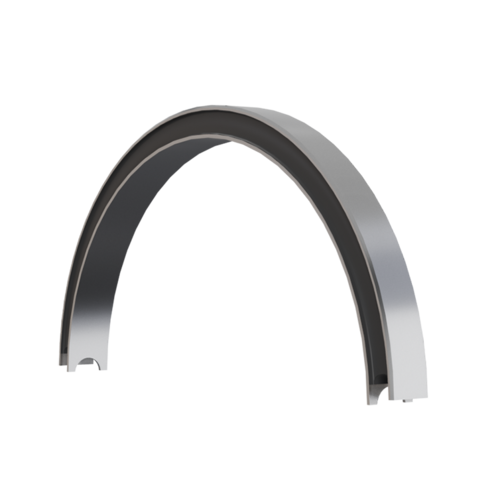
A bearing shell or trunnion bearing made of rubber and metal is used in shipbuilding to provide precise, elastic support and to absorb forces. The rubber body absorbs vibrations and shocks, while the metal components transfer the forces into the structure. Such bearings are frequently used in heavy-duty units or engines. Thanks to their design, they protect the unit and the ship’s structure from vibrations, load spikes and premature wear.
Area of application
Rubber-and-metal bearing shells or trunnion bearings are specifically used in shipbuilding to provide flexible mounting and absorb forces. Their specific purpose is to support high static loads while simultaneously allowing controlled movement. Typical applications include heavy engines or power units. The rubber reduces vibrations, shocks and load spikes, while the metal components safely transfer the forces into the ship’s structure. This effectively minimizes wear, material fatigue and structural damage to the ship.
Technical details
A trunnion bearing - or a rubber-and-metal bearing shell - used in shipbuilding consists of an elastic rubber element that is firmly bonded to a metal outer and/or inner structure. The rubber acts as a load-bearing and damping element and is designed with specific degrees of hardness to absorb high static loads as well as shock and vibration stresses. The metal components provide a form- and force-fit connection to the ship’s structure and ensure safe load transfer. Technically, these bearings enable controlled pivoting or rotational movements around an axis while simultaneously reducing friction and load peaks. They are also designed for long-term use under maritime conditions such as humidity, salt spray and temperature fluctuations.
Characteristics
Rubber-and-metal bearing shells and trunnion bearings used in shipbuilding are characterized by their high load-carrying capacity combined with elastic damping. They effectively reduce vibrations, shocks, and load spikes, thereby protecting both the ship’s structure and the components mounted on them. A key advantage is their ability to allow controlled pivoting or rotational movements without requiring additional lubrication or complex bearing technology. In addition, they are extremely robust and resistant to marine influences such as salt spray, moisture and temperature fluctuations. As a result, they offer a low-maintenance, durable and reliable bearing solution for demanding applications in shipbuilding.