
Weighing Technology
Rubber and metal damping elements are used in weighing technology to reliably isolate scales and weighing systems from vibrations, shocks and environmental disturbances. They stabilize the structure, protect sensitive load cells and ensure that measured forces are transmitted accurately and without distortion. As a result, they enhance the accuracy and repeatability of results, as well as the long-term stability of scales.
Area of application
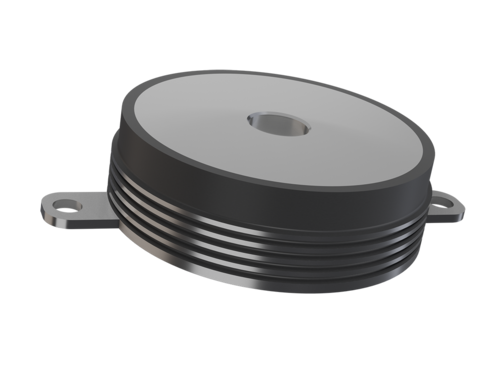
Rubber and metal damping elements play a central role in weighing technology and in the manufacture of scales to ensure precise and stable measurement results. They are used in industrial scales, laboratory balances, dosing and filling systems, as well as in vehicle and platform scales, where they reliably isolate the scale structure from vibrations, impacts and shocks in the environment. This prevents external influences from distorting the measurement or placing mechanical stress on the sensitive load cells. Technically, these damping elements consist of an elastic rubber component that is firmly connected to metal supports, threaded bolts or housings. The rubber provides damping and vibration isolation, while the metal ensures the necessary load-bearing capacity, dimensionally stable mounting and defined force transmission. Depending on the design, rubber compound and hardness, the elements can be specifically adapted to the load, sensitivity and installation conditions of the respective scale. Key features include high damping effectiveness, precisely reproducible stiffness, compact dimensions and a maintenance-free, durable design. The benefits include increased measurement accuracy, improved repeatability of measurement results and long-term stability of the scales. In addition, rubber and metal damping elements protect the load cells and mechanical components from overload and wear, which increases operational reliability and extends the service life of the scales.
Technical details
In weighing technology, rubber and metal damping elements are used to protect sensitive load cells and measuring mechanisms from external vibrations, shocks and disruptive forces, thereby ensuring stable and accurate measurement results. Due to their viscoelastic behavior, rubber-based elements offer high internal damping and are particularly effective at reducing high-frequency vibrations and noise. Metal damping elements are characterized by high stiffness, dimensional stability and minimal deformation, which enable precise force transmission and the isolation of low-frequency disturbances; however, they possess only low inherent damping. Therefore, combined rubber-metal elements are frequently used in practice to ensure reliable vibration decoupling while simultaneously guaranteeing high measurement accuracy and long-term stability.
Characteristics
The most important properties of rubber and metal damping elements in weighing technology are high measurement stability, precisely defined stiffness and an appropriate degree of damping to minimize the effects of vibration. Rubber offers high internal damping and effectively reduces disturbances and decay times, but is susceptible to aging and environmental influences. Metal elements are characterized by high dimensional stability, low deformation and long-term consistency, but have only low inherent damping. When combined, both materials enable the system to settle quickly and ensure consistently accurate, reproducible weight measurement over the long term.