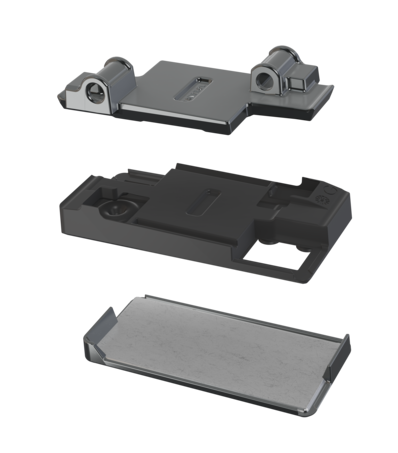
Rail fasteners
The use of rubber-metal rail fasteners, known as “bonded fasteners,” stems from specific operational, structural and environmental requirements in track construction. They are primarily used when rigid fasteners would not be able to withstand the acting forces and influences over the long term or would cause undesirable side effects. Typical conditions include high dynamic loads due to increasing axle loads, high train frequencies or high operating speeds. In such cases, strong wheel-rail forces arise which, without an elastic intermediate layer, can lead to increased wear, material fatigue and damage to the superstructure and substructure. Bonded fasteners serve to dampen these forces and distribute them evenly. Another reason for their use is sensitive environments such as inner-city routes, tunnels, bridges or facilities near residential areas, hospitals or industrial plants. In these locations, vibrations and structure-borne noise must be reduced to minimize noise pollution and protect adjacent structures. Elastic rail mounting is an essential prerequisite for this. In summary, rubber-metal rail fasteners are always used where high loads, limited installation space, strict requirements for vibration and noise reduction, electrical safety, as well as a long service life and low maintenance needs come together.