
Construction Bearing
A rubber-metal construction bearing with reinforcing steel combines the elasticity and damping properties of rubber with the load-bearing capacity and dimensional stability of steel. It protects structures from undesirable stresses, safely accommodates movements and ensures long-lasting, maintenance-free operation - an important element in bridge and civil engineering.
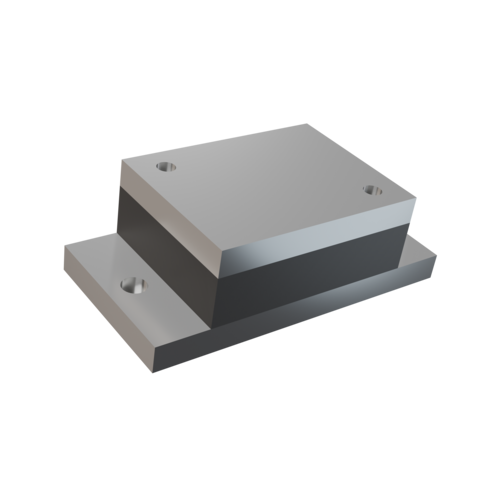
Area of application
Rubber-metal construction bearings with reinforcing steel are primarily used in building construction and civil engineering, where they serve as elastic connecting elements between load-bearing structural components. Typical applications include bridge superstructures, piers, columns, building slabs, steel structures and machine foundations. The bearing ensures the safe transfer of high vertical loads while simultaneously allowing for horizontal movements caused, for example, by thermal expansion, settlement or dynamic loads. In this way, it reliably protects structures from constraint stresses and cracks and contributes significantly to the longevity and structural safety of the entire structure.
Technical details
A rubber-metal construction bearing with steel reinforcement is a multi-layered elastomer bearing that has been specifically designed to safely support heavy loads while allowing for controlled movement within the structure. It consists of one or more elastic rubber layers reinforced by steel reinforcement fully vulcanized over the entire surface. These steel plates increase the bearing’s vertical stiffness and prevent the rubber from bulging laterally under compressive loads. While the elastomer allows for elastic deformation in the horizontal direction and dampens vibrations, the internal steel reinforcement ensures structural stability and a defined load distribution. As a result, the bearing can accommodate thermal expansion, settlement or dynamic loads without causing harmful stress spikes in the structure. The combination of rubber and steel results in a robust, durable bearing with clearly defined load-bearing, displacement and rotational behavior that operates with virtually no maintenance and reliably contributes to the safety and durability of the structure.
Characteristics
A rubber-metal structural bearing with steel reinforcement is characterized by a combination of high load-bearing capacity, elastic flexibility and excellent fatigue strength. The embedded steel reinforcement provides the bearing with high dimensional stability and enables it to safely absorb large vertical loads, while the elastomer allows for horizontal deformations and enables controlled rotation. Thanks to its elastic properties, the bearing effectively dampens oscillations and vibrations, thereby reducing the transmission of dynamic forces to the structure, which results in a noticeable reduction in stress on adjacent components. In addition, the material is resistant to weathering, ozone and aging, enabling a long service life with maintenance-free operation. The combination of flexibility, load-bearing capacity and vibration isolation makes the reinforced rubber-metal building bearing a reliable and durable solution for demanding building structures.