
MF Element
An MF element made of rubber and metal is a vibration-damping machine component used to reduce vibrations, shocks and structure-borne noise in technical systems. It typically consists of an elastic rubber element that is firmly connected to metal plates, bushings or threaded bolts. This combination provides high load-bearing capacity along with effective elastic damping.
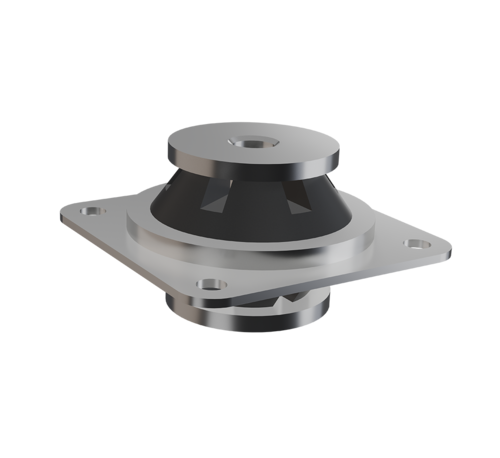
Area of application
MF elements are primarily used in mechanical and plant engineering for vibration and shock isolation of machines, units and modules. A typical area of application is the elastic mounting of motors, pumps, fans, compressors, power units, transport and protective mountings for sensitive assemblies, as well as machine modules in general mechanical and plant engineering. They are particularly well-suited for applications involving continuous vibrations or varying dynamic loads, where reliable vibration isolation is required in combination with a compact and robust design.
Technical details
The metal component of the MF element provides a secure connection to the machine and the substructure and ensures that static and dynamic loads are absorbed. The rubber element acts as a springy and damping medium that absorbs vibration energy and converts it into heat. This significantly reduces the transmission of vibrations to the substrate or adjacent components, which both lowers the noise level and minimizes wear on machines and mounting points.
Characteristics
MF elements are typically designed to withstand compressive, tensile, and shear loads and - depending on their design and rubber compound - can absorb forces in multiple directions. The choice of rubber material determines key properties such as stiffness, damping and resistance to oil, grease, chemicals and temperature.