
Cab Mount
Cab mounts are elastic mounting components used to mount vehicle or machine cabs in a vibration-isolated manner. They connect the cab to the frame or the support structure and ensure that vibrations, shocks and structure-borne noise from the chassis, drivetrain or powertrain are transmitted to the cab to a lesser extent. Cab mounts combine sturdy metal components with an elastic body, thereby enabling a smooth, decoupled and comfort-oriented mounting of the cab.
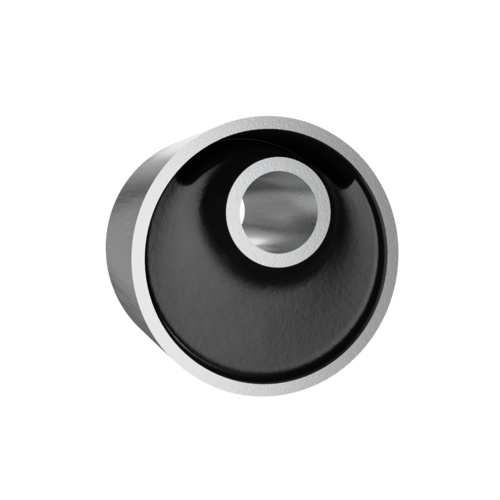
Area of application
Cab mounts are used in mobile machinery, commercial vehicles, industrial trucks, construction equipment, agricultural machinery and stationary operator cabs. They serve to enhance comfort and safety for operators and drivers by reducing vibrations and shocks caused by chassis movements, engine vibrations or uneven surfaces. In machine cabs, cab mounts are used to protect sensitive controls, displays and electronics from excessive stress. Through their decoupling effect, they improve working conditions, reduce noise levels and enhance the overall quiet operation of the system.
Technical details
A cab mount typically consists of a metal support component, which is used to attach the mount to the frame, and a firmly connected elastomer component made of rubber or a comparable material. The elastomer component is designed to effectively dampen vibrations while providing sufficient stiffness to keep the cab stable. Depending on the required bearing characteristics, different material blends and geometric designs can be used. Cab mounts are structurally designed to reliably absorb vertical forces from the cab’s weight, horizontal loads caused by movement and dynamic impacts. Variants with higher damping values and progressive spring characteristics can be implemented depending on the application.
Characteristics
Cab mounts are characterized by high vibration and shock absorption, good elasticity and a stable, durable design. They reduce the transmission of vibrations and noise, ensure smooth cabin mounting and improve comfort and working conditions for operators. The metal-elastomer structures ensure reliable force absorption, a long service life and robust mounting performance even under varying loads. Since cab mounts are safety-critical components, they must always be designed to be tear-resistant. Tear resistance is not an optional feature but a mandatory design requirement. It ensures that, in the event of damage or elastomer failure, the cabin is not separated uncontrollably from the supporting structure, thereby helping reduce the impact of accidents or hazardous situations.
Variants
Bush
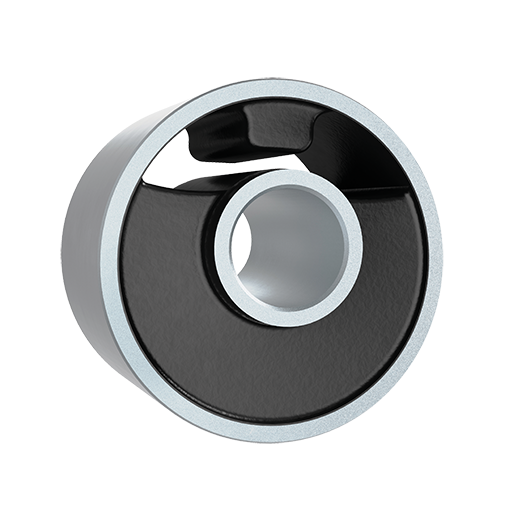
Bushes are elastic rubber-metal components designed to provide vibration-isolated and stable mounting for vehicle and machine cabs. They connect the cab to the frame, allow for controlled movement and reduce vibrations and dynamic forces to ensure controlled cab mounting. They are used in mobile machinery, commercial and industrial vehicles, as well as construction and agricultural machinery - anywhere where decoupling from the frame or drive train is necessary. The elastic mounting protects drivers and components - such as electronics and instruments - from vibrations and noise, and enhances operational safety. Thanks to their compact design, they are particularly well-suited for tight installation spaces. A bushing consists of inner and outer metal bodies with a firmly vulcanized elastomer core. Its design allows it to absorb various forces and undergo defined elastic deformations for vibration damping and uniform force distribution. Bushings offer high damping performance, ensure a smooth ride in the cab and protect both the driver and the vehicle’s systems. They are designed for dynamic loads and can be adapted to specific operating conditions. Additionally, they are tear-resistant, as the metal sleeves absorb forces and prevent the bushings from coming loose.
Conical mounting
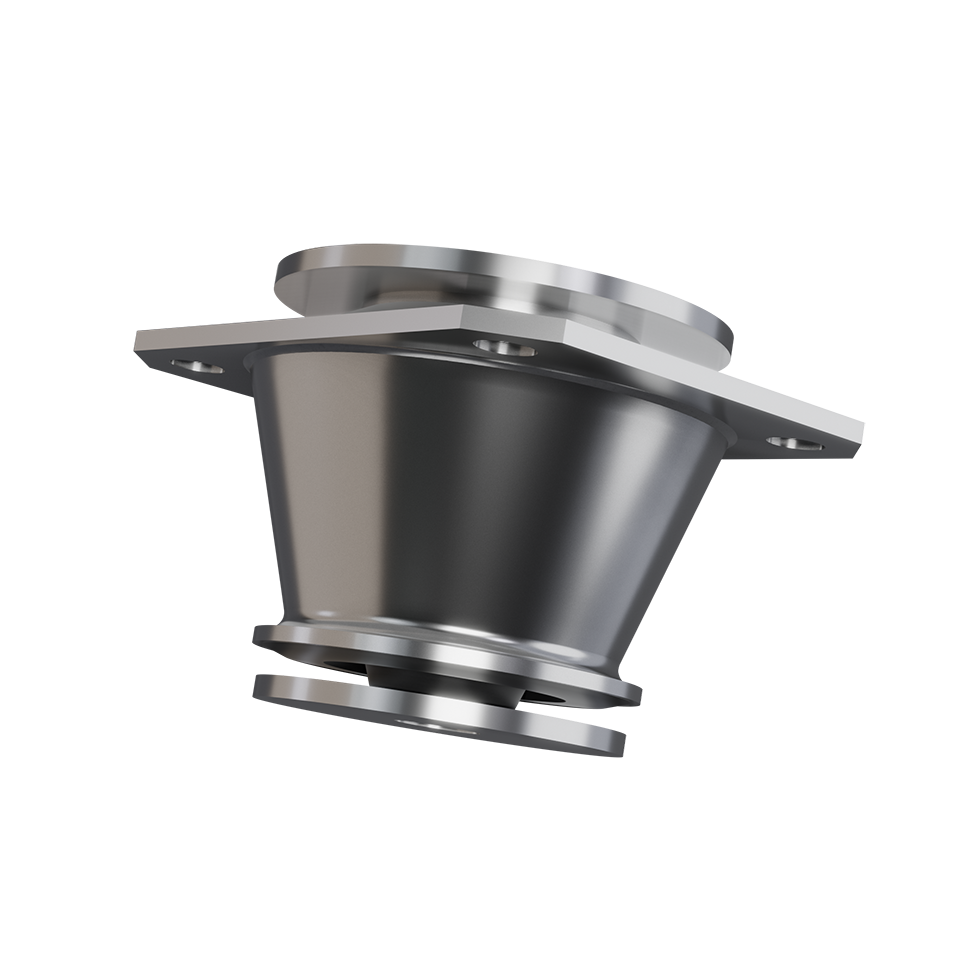
Conical mountings are elastic rubber-metal components designed to provide vibration-isolated mounting for machine and vehicle cabs. Their tapered geometry allows for the targeted absorption and dissipation of axial and radial forces, thereby distributing loads and controlling cab movements. They are used in mobile machinery, commercial vehicles, industrial trucks, construction and agricultural machinery, as well as in stationary cabins. There, they decouple cabins from the frame and reduce vibrations from the chassis and drivetrain. Especially under combined loads caused by uneven surfaces or load cycles, they protect operators and sensitive components and ensure stable, flexible cab guidance. A conical bearing consists of conically shaped inner and outer metal bodies with a permanently bonded elastomer. This design allows for the simultaneous absorption and distribution of forces, as well as the effective damping of vibrations and shocks. An integrated shear protection mechanism prevents failure under overload. Conical bearings are characterized by high vibration and noise damping, stable force absorption and a durable, low-maintenance design. They compensate for movements, reduce load peaks and ensure smooth cabin movements as well as a long service life for the entire structure.
Round Bearing
Round bearings serve as cab bearings to provide a vibration- and shock-absorbing connection between the cab and the frame. Their rotationally symmetrical design enables controlled force transmission in both the axial and radial directions, reduces vibrations and noise and facilitates compact decoupling of the cab structure. They are used in mechanical and plant engineering, on test benches and in conveyor and automation technology, e.g., on power units, pumps or control cabinets. Thanks to their design, they can be integrated in a space-saving manner and ensure reliable decoupling under combined loads, which increases operational safety and service life. Round or circular bearings consist of a firmly bonded elastomer-metal composite. They absorb static and dynamic forces from the cabin’s weight and operation and transfer these forces to the structure in a controlled manner. This achieves uniform load distribution while providing elastic mounting. They offer space-saving integration, easy installation and reliable damping. Vibrations and noise are reduced, cabin movement is smoothed out and adjacent components are protected. Their properties can be adapted to different operating conditions through the choice of elastomer and geometry.