
Motorsport
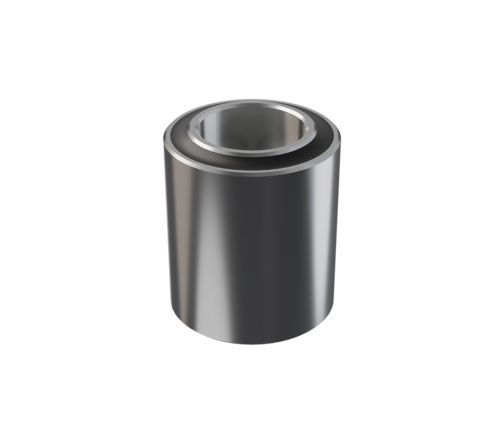
Rubber-metal mounts - such as bushings or spherical bearings - are a key functional component in automotive racing for the suspension, powertrain and engine mounting. They are used to specifically dampen high dynamic forces, vibrations and impacts without compromising the steering and suspension precision required for driving.
Area of application
In motorsports, rubber-metal products such as bushings provide elastic mounting for control arms, stabilizer bars and axle components, thereby reducing unwanted vibrations while simultaneously allowing for defined degrees of freedom. Spherical bearings and specially tuned bushings are designed for defined stiffness, high restoring forces and extreme loads such as high lateral accelerations and temperature fluctuations. By combining elastic rubber with load-bearing metal parts, these mounts enable controlled force transmission, reduce material fatigue in adjacent components and contribute to driving stability, traction and the reproducibility of vehicle tuning. As a result, rubber-metal bushings make a decisive contribution to performance and reliability, even in motorsports.
Technical details
In motorsports, rubber and metal damping elements are used to control vibrations, impacts and dynamic loads, and to improve vehicle stability and driving precision. Due to their viscoelastic behavior, rubber-based components offer high internal damping and are particularly well-suited for absorbing high-frequency vibrations as well as reducing noise and micro-vibrations. Metal damping elements, such as springs or special metal structures, are characterized by high strength, temperature resistance and load-bearing capacity, and enable effective control of low-frequency vibrations under extreme loads. In practice, rubber-metal combinations are frequently used - for example, in bearings, engine mounts or chassis components - to achieve an optimal balance between damping, stiffness and dynamic handling characteristics.
Characteristics
The most important characteristics of rubber and metal damping elements in motorsports are high dynamic load-bearing capacity, precisely tuned stiffness and an effective degree of damping across a broad frequency spectrum. Rubber offers high internal damping, reduces vibrations and noise and improves ride comfort; however, it is susceptible to temperature changes and wear. Metal components are characterized by high strength, temperature resistance and dimensional stability, ensuring reliable performance even under extreme conditions; however, they exhibit only low inherent damping. When combined, both materials provide an optimal balance between vibration control, driving stability and direct handling.