
Stop Buffer
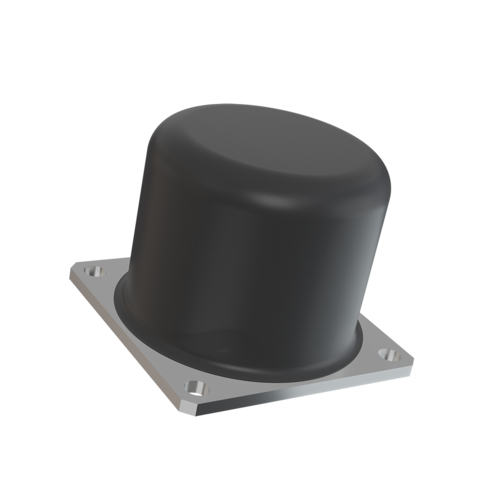
Stop buffers are damping components designed to control and limit movement in mechanical systems and to absorb impacts. They typically consist of elastomeric materials combined with metal parts and act as energy-absorbing elements between two components. Through their damping effect, end stops protect components from abrupt load spikes, reduce vibrations and contribute to smooth, material-friendly motion in plants, machines or vehicles.
Area of application
Stop or end buffers are used in a wide variety of technical systems where movement must be limited or cushioned in a controlled manner. Typical applications include machine guides, stop points in conveyor and vehicle technology, lifting and swivel systems, as well as assembly and automation equipment. They prevent moving components from striking fixed stop surfaces without damping, thereby protecting both the structure and the mechanical components from overload. In dynamic applications, they serve as end-of-travel dampers, while in static applications they set movement limits and simultaneously reduce noise and shock loads.
Technical details
Stop or impact buffers are typically made of an elastic material such as rubber, which is firmly attached to a metal carrier or a mounting component. The elastomer compound is selected based on its hardness, resilience and damping characteristics to ensure the desired shock absorption. Depending on the design, bumpers can absorb axial, radial or combined loads. The geometry - for example, cylindrical, conical or with special profiles - influences the spring and damping characteristics. Variants with an integrated screw, threaded sleeve or mounting plate allow for easy integration into various structural applications. In addition, heat-, oil- or weather-resistant materials can be used if required by the intended application.
Characteristics
Stop buffers are characterized by their high shock absorption and robust mechanical strength. They absorb energy during end-of-travel impacts, reduce vibrations and noise and protect adjacent components from wear or damage. The elastic material allows for controlled deformation and ensures consistent damping behavior, while the metal components guarantee secure fastening. Their customizable material and shape properties allow for precise adaptation to different load conditions and environmental factors.