
Disc Coupling
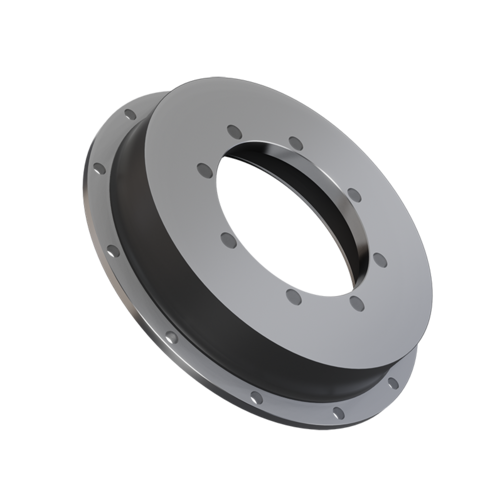
A rubber-metal disc coupling is a flexible coupling element that is installed between the engine and the transmission and transmits torque via the rubber body. The rubber is connected to the metal hubs either by a form-fit connection or through vulcanization, allowing for the compensation of misalignment as well as the effective damping of torsional vibrations and shocks. In shipbuilding in particular, the coupling protects the drive train and gearbox from overloads, reduces noise and extends the service life of the entire system, even under varying load conditions.
Area of application
The disc coupling, consisting of rubber and metal discs, is installed between the engine and the gearbox to provide a flexible connection in a ship’s powertrain. It is primarily used in applications where varying loads, engine vibrations and sudden torque fluctuations occur. Its purpose is to isolate the transmission and the downstream shaft system from these dynamic loads. At the same time it compensates for unavoidable misalignments between the engine and the transmission.
Technical details
The elastic element of a so-called disc coupling consists of an elastomer body that is firmly bonded to the metal discs through vulcanization. The metal discs ensure a secure connection to the engine and transmission, as well as the transmission of high torques. The rubber element provides torsional flexibility and dampens torsional vibrations and load shocks. Technically, the coupling compensates for axial, radial and angular misalignments within defined limits. Its design is based on torque, speed, load profile and environmental conditions.
Characteristics
Rubber-metal composite disc couplings for shipbuilding are characterized by their exceptional torsional and vibration damping properties, which effectively protect drive trains from load spikes. They allow for flexible compensation of misalignment and offset without introducing additional forces into shafts or bearings. A key feature is their noise-reducing effect combined with high torque transmission, even under varying loads. In addition, they offer high resistance to moisture and temperature fluctuations.