
U-bearing
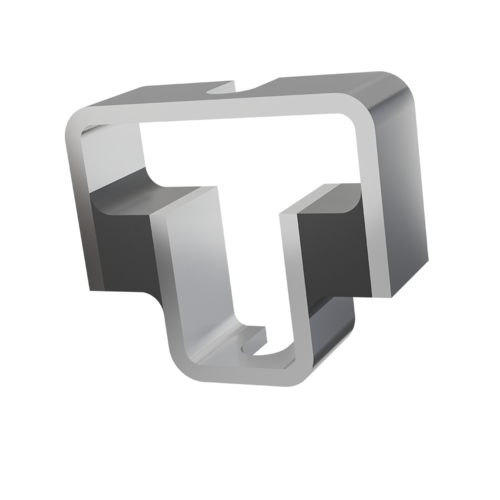
U-bearings, which are rubber-metal composite components, are used in mechanical and plant engineering for the elastic mounting of machines, units and assemblies. They combine a metal support structure with an elastic rubber body, effectively reducing vibrations, shocks and structure-borne noise. Typical applications include motor and machine mountings, conveyor technology and the decoupling of foundations.
Area of application
Rubber-and-metal U-bearings are specifically used in mechanical and plant engineering for vibration- and noise-damping mounting of machines, units and assemblies. They are particularly suitable for applications with moderate static and dynamic loads where movements and misalignments must be elastically compensated. Typical applications include motor and gearbox mountings, pumps, fans and conveying and packaging machines. In addition, U-bearings are frequently used to decouple foundations and frame structures in order to reliably reduce vibrations.
Technical details
U-bearings consist of a rubber-metal composite in which a vulcanized elastomer body is firmly bonded to inner and outer steel components. The rubber core absorbs vibrations, shocks and noise, while the metal components ensure load transfer and secure mounting. Technically, U-bearings offer defined axial and radial stiffness, allow for the compensation of misalignment and angular errors and also act as isolators. The bearing’s properties can be specifically tailored to the respective application through the rubber compound, geometry and hardness.
Characteristics
Rubber-metal U-bearings are characterized by their high vibration and noise damping, as well as their elastic movement compensation. They enable the decoupling of vibrations and shocks, thereby reducing wear on adjacent components. They are characterized by their compact design, maintenance-free operation and good resistance to media and aging, depending on the rubber compound. In addition, they offer a cost-effective solution for applications with medium loads and moderate movements.