
Impact protection strip: protection against external influences
Rubber-to-metal bonded impact protection strips or also called bumper strips reliably protect railway vehicles from impacts, collision forces and external influences. They play a crucial role in ensuring the longevity and safety of vehicle fleets.
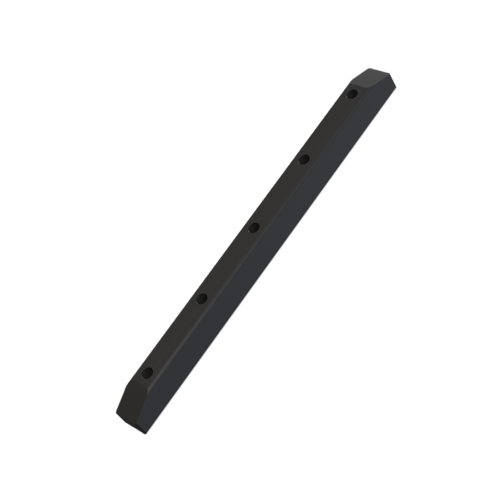
Area of application
Rubber-to-metal bonded impact protection strips are used in the railway vehicles to reliably protect sensitive vehicle areas from impacts, collision loads and mechanical damage. Their typical applications range from side walls and entry areas to underfloor components, as well as end walls and transition areas, where vehicles frequently come into contact with foreign objects, platform edges or shunting forces. Thanks to their elastic design, they effectively absorb energy, thereby preventing structural damage to the vehicle.
Technical details
The technical details of these rubber-metal impact protection strips are based on a robust combination of metal supports and heavy-duty elastomers. The metal ensures dimensional stability and secure fastening, while the vulcanized rubber element absorbs impacts and reduces vibrations. Depending on the application, the profiles can be manufactured in various geometries, Shore hardness grades, and fastening options. Many systems feature a modular design, are easily replaceable and are engineered for long-term use under varying weather and operating conditions.
Characteristics
Key characteristics of rubber-metal impact protectioon strips include their high impact resistance, effective vibration and noise damping as well as resistance to temperature fluctuations, moisture, oils, and chemical exposure. They extend the service life of adjacent vehicle components, reduce maintenance requirements and contribute to operational safety in rail transport. Thanks to their elastic surface, they also minimize the risk of material wear or deformation during minor collisions, thereby supporting cost-effective and long-lasting vehicle operation.