
Radio Mounts
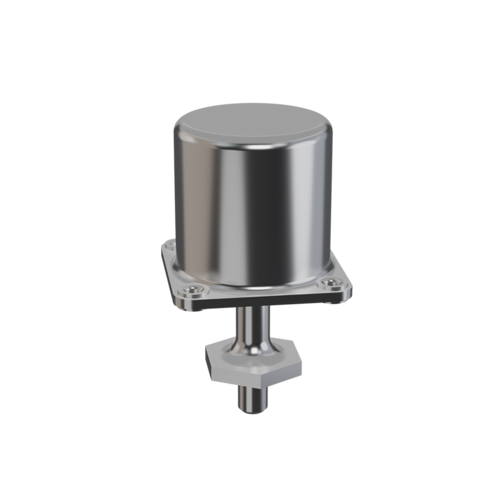
Rubber and metal radio mounts are used in defense and military technology to reliably protect military communications equipment against vibrations, shocks and mechanical stresses. They ensure the operational reliability of radio and data transmission systems in vehicles, mobile troop systems and stationary installations. The elastic mounts increase operational stability and significantly reduce the probability of failure under harsh operating conditions.
Area of application
Rubber and metal radio mounts are used in protective and defense technology in military wheeled and tracked vehicles to effectively protect radio equipment from vibrations and impacts. They are also used in mobile command posts and in protected container solutions for communications and IT systems. Other areas of application include radio and navigation systems in naval platforms, stationary military infrastructure such as command centers or bunker facilities, as well as airborne ground stations and near-ground sensor components with integrated radio technology.
Technical details
Rubber-and-metal radio equipment mounts consist of a variety of metal parts and threaded elements, some of which are connected to one another via precisely molded elastomer bodies to provide vibration isolation. The elastomer body is designed to ensure uniform decoupling in all directions and to specifically prevent resonances. Depending on the installation situation, integrated cable, connector, or device mounts as well as metal limiting elements to protect against overload, may be provided. The entire assembly is designed for minimal space requirements, defined installation forces and reproducible damping values for highly sensitive electronics.
Characteristics
Rubber and metal radio equipment mounts for security and defense applications are characterized by high electromagnetic compatibility and help shield sensitive radio equipment from interference. They are designed to ensure consistent transmission characteristics for radio and data signals, even under continuous vibration or shock loads. Another key feature is their stable performance during rapid load changes, which reliably prevents contact interruptions or frequency deviations. In addition, they are often designed for concealed, low-signature integration and meet qualified military testing and approval requirements.