
Cargo Sealing Strip for freight car bodies
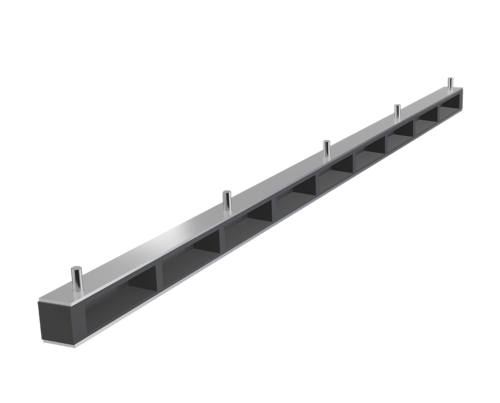
A rubber-metal sealing strip is a combined sealing and protective profile used on freight car bodies to reliably seal gaps, joints and movable transitions while also providing mechanical reinforcement. It consists of two metal supports and the rubber profile.
Area of application
Rubber-metal sealing strips are used in freight transport in various areas of the railcar body, particularly on the doors and hatches of bulk cars, coil cars, sliding-wall cars, and tank cars. They are also used at roof transitions, movable components, maintenance openings, as well as at frame edges and joints. They are also installed along the edges of loading areas to prevent the ingress of dirt and the effects of weather. Overall, these sealing strips serve to reliably protect the cargo, vehicle components, and the car structure from external influences while simultaneously enhancing the operational safety of freight cars.
Technical details
A rubber-metal sealing strip consists of an elastic rubber profile and two vulcanized metal carriers; it provides reliable sealing and support. The rubber profile serves as the actual sealing element. Thanks to its elasticity, it adapts to various sheet metal edges, doors, flaps, or transition areas and provides effective sealing against water, dust, dirt, and splashed material. At the same time, it dampens vibrations and oscillations and compensates for manufacturing and assembly tolerances between sheet metal or frame components. Special compounds are typically used for this purpose, characterized by high weather resistance, ozone and UV resistance, temperature stability, and long-lasting elasticity.
The rubber profile is embedded between the metal supports, which are typically made of galvanized sheet steel or stainless steel. They ensure the dimensional stability of the sealing strip and guarantee a secure clamping effect during installation, for example, on sheet metal edges. In addition, they increase resistance to mechanical stress and ensure that the sealing strip remains securely in place even under intense vibrations and the varying forces encountered during vehicle operation. The metal supports thus reliably prevent the elastic rubber profile from loosening, shifting, or detaching under continuous stress.
Characteristics
A rubber-metal sealing strip for freight car bodies must meet a number of specific requirements in order to withstand the high stresses of daily operation. It is characterized by high mechanical strength and reliably withstands impacts, abrasion, and the harsh operating conditions of freight cars. In addition, it is largely resistant to moisture, chemicals, oils, salt, and brake dust, ensuring it remains functional even under adverse environmental conditions. The sealing strip must also withstand large temperature fluctuations and possess excellent vibration resistance to ensure it remains securely in place even during severe car movements. Thanks to the combination of flexible rubber and sturdy metal supports, the sealing strip provides both an effective seal and a robust fastening—a decisive advantage in freight transport, where vehicles are exposed to heavy mechanical loads and changing weather conditions.