
Rails
Rubber-metal mounts are mounting elements consisting of an elastic rubber component and a load-bearing metal structure, used in industrial and mechanical engineering. They are used for the elastic mounting and decoupling of machine parts by damping vibrations and shocks while simultaneously absorbing loads. Typical applications include machine foundations, conveyor systems and the mounting of power units.
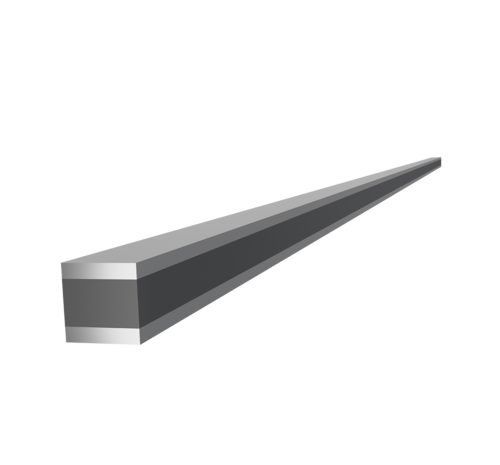
Area of application
Rubber-metal rails are used in industrial engineering and general mechanical engineering primarily for the elastic mounting, guidance and decoupling of machine components. Typical applications include machine foundations, sliding systems, conveyor systems and the mounting of motors, power units and heavy assemblies. Their purpose is to reduce vibrations, shocks and structure-borne noise, thereby protecting machines and structures.
Technical details
A rubber-metal rail consists of a metal support profile, usually made of steel or aluminum, with a permanently bonded elastic rubber body. Depending on the application, the rubber is available in various degrees of hardness, geometries and compounds to precisely adjust load-bearing capacity, damping and displacement. The metal and rubber are often bonded through vulcanization, which ensures a permanent and force-fit bond. Rubber-metal rails are engineered to withstand high static and dynamic loads and to provide resistance to temperature, oil and aging. In addition, they allow for defined displacement or sliding functions while providing vibration isolation.
Characteristics
Rubber-metal mounts are characterized by their high ability to dampen vibrations and absorb shocks, thereby helping to reduce noise and vibrations. They can simultaneously withstand high static and dynamic loads without losing their elastic properties. An important feature is their ability to compensate for tolerances, misalignment and thermal linear expansion between machine components. In addition, they are robust, low-maintenance and designed for a long service life. Thanks to their combination of flexibility and load-bearing capacity, they enhance the operational reliability and service life of machines and systems.