
Socket
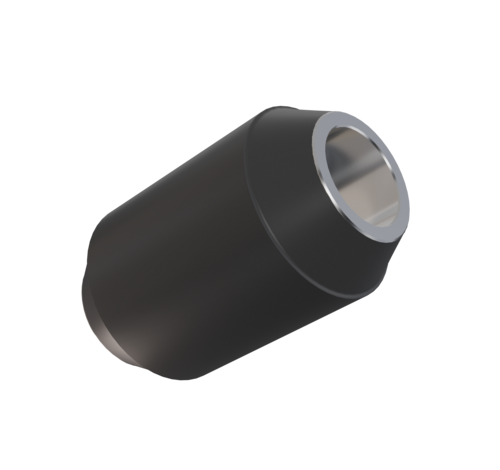
In the commercial vehicle sector, a rubber-and-metal bushing serves as a flexible engine mount that connects components such as the engine, transmission or auxiliary units to the vehicle frame with minimal vibration. It consists of an inner and outer metal sleeve, between which a flexible rubber body is firmly embedded. The bushing effectively dampens vibrations, shocks and structure-borne noise, compensates for movements in multiple directions and thereby protects both the powertrain and adjacent components.
Area of application
In the commercial vehicle sector, a rubber-and-metal bushing is typically used as a powertrain mount to flexibly connect engines, transmissions or other attached components to the vehicle frame. They are usually located at the mounting points between the powertrain and the chassis or subframe, where they compensate for movement and dampen vibrations and shocks. Thanks to its compact design, the bushing is ideal for locations with limited installation space and high dynamic loads. It reduces noise, protects surrounding components, and ensures durable, low-maintenance mounting of the powertrain components.
Technical details
A cylindrical rubber-and-metal bushing used as a powertrain bearing in the commercial vehicle sector consists of inner and outer metal sleeves and a vulcanized rubber body. The cylindrical shape ensures even load distribution, while the rubber acts as a spring-like, damping element and allows for both radial and limited axial movement. The metal sleeves ensure high stability and a precise connection between the powertrain and the chassis or subframe. The optimized rubber compound and geometry enable effective vibration and noise isolation while ensuring a long service life under dynamic loads.
Characteristics
A cylindrical rubber-and-metal bushing used as a powertrain bearing in the commercial vehicle sector consists of inner and outer metal sleeves and a vulcanized rubber body. The cylindrical shape ensures even load distribution, while the rubber acts as a spring-like, damping element and allows for both radial and limited axial movement. The metal sleeves ensure high stability and a precise connection between the powertrain and the chassis or subframe. The optimized rubber compound and geometry enable effective vibration and noise isolation while ensuring a long service life under dynamic loads.