
Aggregate Bearing
Rubber-to-metal bonded and assembled aggregate bearings for compressors, turbines and engines are used in shipbuilding to provide flexible, low-vibration support for heavy drive and auxiliary units. They effectively decouple the machinery from the ship’s hull and reduce vibrations and structure-borne noise, thereby enhancing comfort and extending the structural service life. At the same time, they are designed to withstand high static and dynamic loads as well as harsh marine environmental conditions. Thanks to their robust construction, they contribute significantly to operational safety and to the protection of the entire ship’s structure.
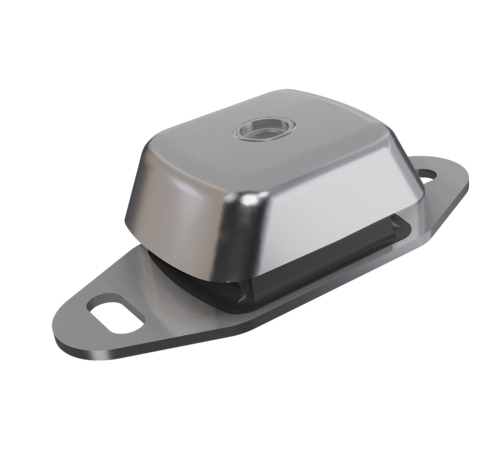
Area of application
Rubber-metal aggregate bearings are used in shipbuilding to provide flexible support for compressors, turbines and engines and to securely connect them to the ship’s structure. Their purpose is to effectively reduce vibrations, shocks and structure-borne noise, thereby protecting the hull and adjacent systems. Typical applications include main and auxiliary engines, generators, pump systems and air conditioning and compressor systems. As a result, aggregate bearings contribute significantly to operational safety, onboard comfort and the extended service life of machinery and ship structures.
Technical details
Rubber-metal aggregate bearings used in shipbuilding consist of an elastic rubber body that is largely bonded to the metal parts and can withstand high loads. The rubber is manufactured in specific hardness grades and compounds to specifically dampen vibrations, shocks and structure-borne noise. The metal components allow for secure bolting to the foundation and the unit and ensure high mechanical stability. These bearings are designed for high static and dynamic loads and are largely resistant to typical marine influences such as moisture, salt spray and fluctuating temperatures.
Characteristics
Rubber-and-metal aggregate bearings used in shipbuilding provide effective vibration and structure-borne sound insulation, thereby protecting the ship’s hull and adjacent systems. They are characterized by a high load-bearing capacity combined with elastic behavior, which allows them to safely absorb static and dynamic loads. A key advantage is their resistance to marine influences such as moisture, salt spray and temperature fluctuations. In addition, they enhance operational safety, reduce maintenance requirements and extend the service life of equipment and ship structures.
Variants
Compressor Bearing
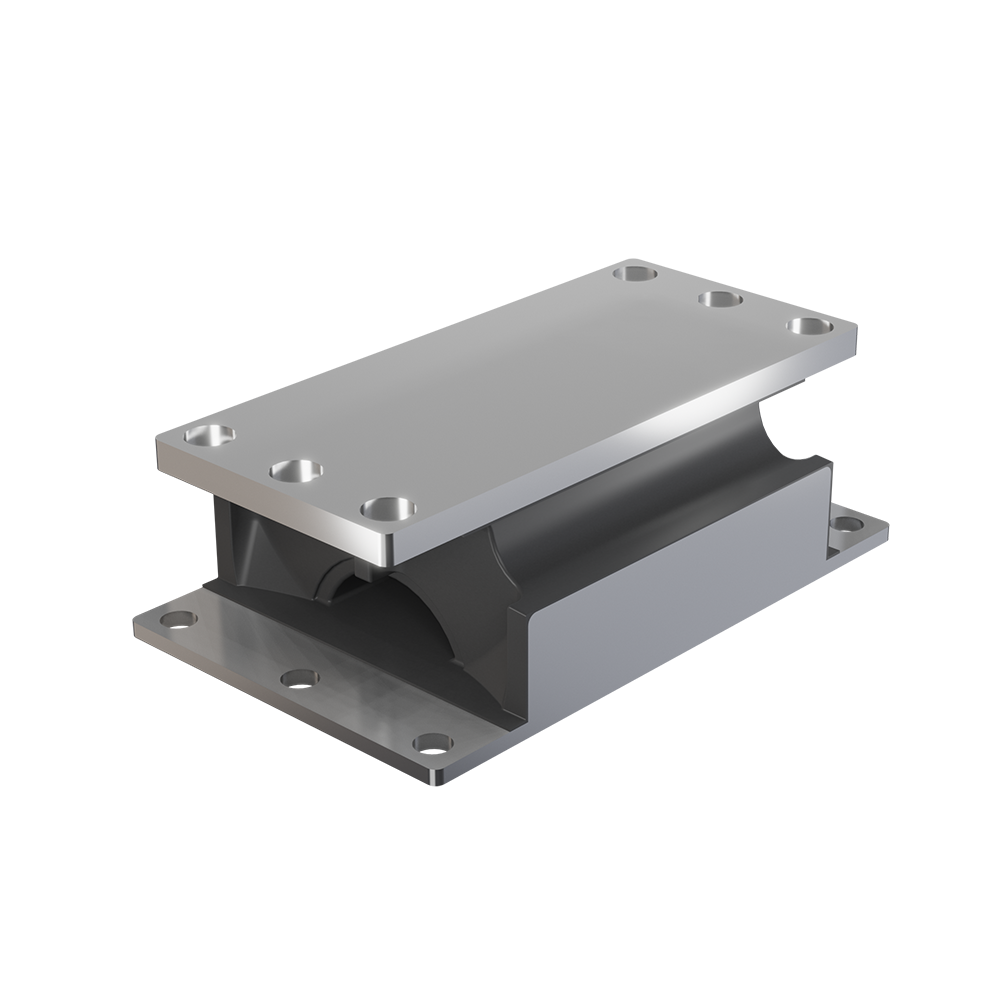
Rubber-and-metal compressor bearings are used in shipbuilding to provide flexible mounting for compressors. They decouple the unit from the ship’s hull and reduce vibrations and structure-borne noise, with the rubber body providing damping and the metal parts ensuring stability and secure fastening. They contribute to quiet operation, protect the ship’s structure and extend the service life of the compressor system. The mounts consist of a flexible rubber body that is firmly connected to metal plates or threaded elements. The rubber is designed for effective damping, while the metal components enable secure bolting and high load-bearing capacity. They are designed for high loads and are resistant to marine influences such as moisture and temperature fluctuations. Compressor mounts offer effective vibration damping, high load-bearing capacity and resistance to environmental influences. They protect the compressor and the ship’s structure from wear and tear and enhance operational safety, comfort, and service life.
Engine Mount (Triflex)

Triflex-type engine mounts, made of rubber and metal, are used in shipbuilding for the flexible mounting of main and auxiliary engines. They decouple the engine from the hull and reduce vibrations, shocks and structure-borne noise, while the metal components safely transfer high loads. They are used in propulsion systems, generators and auxiliary units in engine rooms. There, they prevent the transmission of vibrations to the ship’s structure, reduce noise levels, and increase operational safety as well as the service life of both the engine and the ship. The mounts consist of a flexible rubber body that is firmly connected to metal parts. The rubber provides damping while offering high load-bearing capacity, while the metal components enable secure fastening and the absorption of both static and dynamic loads. Engine bearings offer high vibration and structure-borne noise damping, are resistant to marine environments and protect the structure and machinery from damage. As a result, they improve comfort, reliability and service life during ship operation.
Turbine bearing
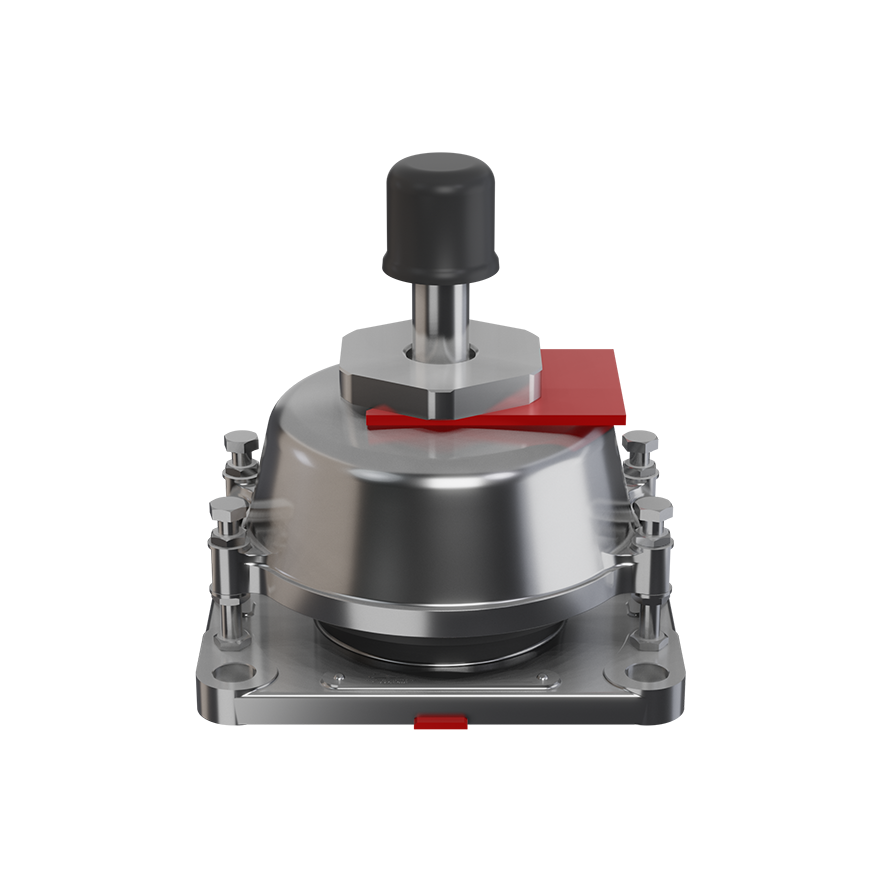
Rubber-to-metal bonded turbine bearings are used in shipbuilding to provide flexible mounting for turbines. They decouple the turbine from the ship’s hull and reduce vibrations and structure-borne noise, with the rubber component providing damping and the metal parts ensuring load-bearing capacity. They are used in propulsion and auxiliary turbines as well as in utility systems. In doing so, they reduce vibrations, protect the turbine and the ship’s hull and ensure smooth and reliable operation. The mounts consist of a flexible rubber body that is firmly connected to metal components. The rubber dampens vibrations even at high rotational speeds, while the metal components enable secure fastening and the ability to withstand high loads. They are designed for continuous operation and exposure to marine environments. Turbine mounts offer high damping, load-bearing capacity and resistance to moisture and temperature fluctuations. They protect against fatigue damage and increase operational safety, comfort and the service life of the system.