
Track Pad
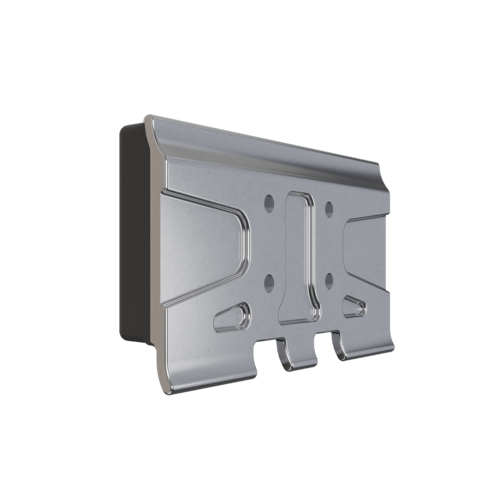
Rubber-to-metal bonded track pads are functional components that are mounted on tracked vehicles and serve as the contact surface between the drive track and the ground. They combine an elastic rubber layer with a sturdy metal support structure. This design enables movement that is gentle on the ground, reduces wear on the track and prevents unwanted indentations on floor surfaces.
Area of application
Rubber-to-metal bonded track pads are used in tracked vehicles that need to be moved on sensitive or slippery surfaces. These include, for example, asphalt and road pavers, vehicles in production halls, logistics areas, indoor spaces or other applications where direct contact between the track and the ground could cause damage. The track pads ensure that forces are distributed evenly and protect floor surfaces from pressure marks, scratches or localized stress. At the same time, they promote smooth, low-vibration movement and extend the track’s service life by minimizing direct abrasion against the floor.
Technical details
Technically, the track pads consist of a firmly bonded rubber-metal structure in which the elastomer component is vulcanized directly onto a metal support element. The support element ensures dimensional stability, secure attachment to the track and even force distribution during operation. The rubber provides cushioning, traction and surface protection. Depending on the application and load, different rubber hardnesses, material blends or tread patterns may be used. The geometry, thickness and arrangement of the pads are designed to enable both the traction of the tracked vehicle and the protection of the ground. Additionally, the pads may feature temperature-, abrasion- or oil-resistant properties, depending on the environment and application profile.
Characteristics
Rubber-to-metal bonded track pads are characterized by their high abrasion resistance, good energy absorption and reliable vibration damping. They reduce wear on the track, improve smooth operation and effectively protect floor surfaces from mechanical stress. The elastic surface prevents indentations and enables even force transmission, while the metal support structure ensures high stability and durability. In addition, these components offer good adhesion to various surfaces and are suitable for long-term use under varying loads.