
Shock damper | Hat Element
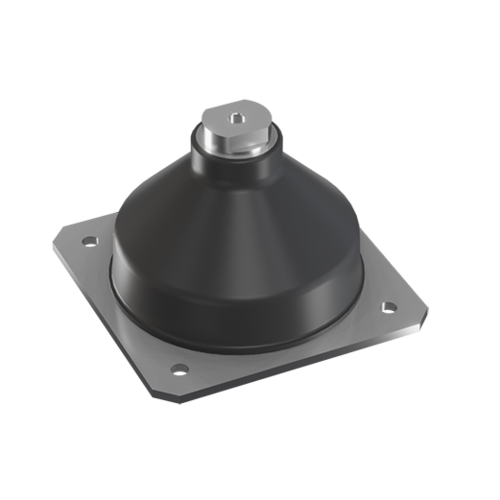
Shock dampers or so called hat elements are used in shipbuilding to specifically dampen impacts and vibrations in machinery, power units and sensitive components. They protect shipboard equipment from mechanical stresses that can result from rough seas, vibrations or sudden accelerations. They are typically used in unit mountings, stops, suspensions or as protection for electronic and mechanical components. Thanks to their elastic properties, they significantly reduce force peaks and structure-borne noise.
Area of application
Shock dampers or so called hat elements made of rubber and metal are used in shipbuilding to specifically protect machinery, power units and systems against impacts, shocks and vibrations. Their purpose is to effectively reduce stresses caused by rough seas, maneuvering or mechanical forces. Typical applications include the mounting of units, in suspension systems, in shock-absorbing systems or for the protection of sensitive components.
Technical details
Rubber-metal shock dampers used in shipbuilding consist of an elastic rubber body that is firmly connected to metal inserts, plates or threaded elements. The rubber is designed with specific degrees of hardness to effectively absorb impact energy, vibrations and structure-borne noise. The metal components ensure secure fastening and the ability to withstand high static and dynamic loads. These dampers are technically designed for operation under maritime conditions such as humidity, salt spray and temperature fluctuations.
Characteristics
Rubber-to-metal bonded shock dampers used in shipbuilding are characterized by very high shock and vibration damping and reliably protect sensitive components. They reduce force spikes and structure-borne noise, thereby contributing to smoother and safer operation. A major advantage is their high load-bearing capacity combined with elastic behavior as well as their resistance to marine influences such as salt spray, moisture and temperature fluctuations. In addition, they are durable, low-maintenance and enhance the operational safety of ship systems.