
Stop buffer
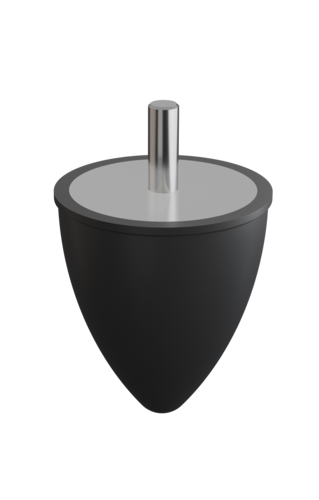
A rubber-and-metal shock absorber is a combined damping element used in industrial engineering and mechanical engineering to slow down and limit movements. The rubber body absorbs shocks and reduces noise, while the metal element ensures secure fastening and high load-bearing capacity. Stop buffers protect machines, components and structures from damage caused by repeated impacts.
Area of application
Rubber and metal stop buffers are used in industrial engineering and general mechanical engineering to safely limit the movement of moving machine parts and absorb any impacts that occur. Typical applications include stops on guide systems and the end positions of slides, flaps, or lifting mechanisms. Their purpose is to absorb forces in a controlled manner, thereby protecting machine structures and components from damage. At the same time, they reduce noise and extend the service life of machines and systems.
Technical details
A rubber-and-metal shock absorber technically consists of an elastic rubber body that is firmly attached to a metal thread, a metal plate or a screw connection. Depending on the application, the rubber is manufactured in different degrees of hardness to achieve the desired damping and energy absorption. The metal component ensures secure fastening and enables the absorption of high mechanical forces. Stop buffers are designed for dynamic loads and are often resistant to oil, aging and temperature fluctuations.
Characteristics
Rubber and metal shock absorbers provide effective shock and vibration damping, thereby protecting machines and components from damage. Thanks to the combination of elastic rubber and sturdy metal, they can reliably absorb high dynamic loads. They significantly reduce noise and wear at impact points. In addition, they are durable, low-maintenance and can be easily integrated into various machine designs.