
Roller rubber buffer
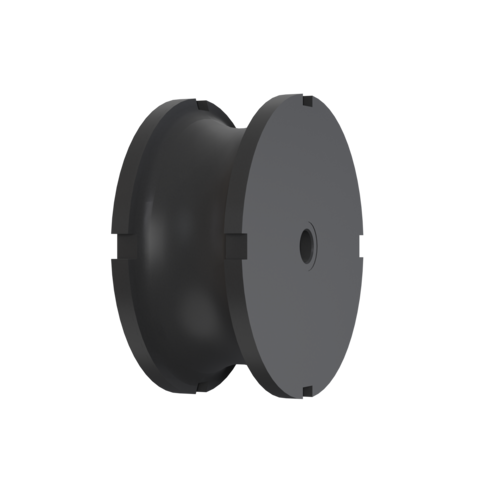
A roller rubber buffer or drum mount in a road roller supports the drum relative to the machine frame and enables its smooth rotational movement. It supports the machine’s heavy weight as well as dynamic loads generated during compaction operations and is designed to withstand impacts and contamination. As a result, it contributes significantly to the smooth operation, operational reliability and service life of the construction machine.
Area of application
A rubber-to-metal bonded roller rubber buffer is mainly used in the construction machinery industry in machines with circumferential drums, where high loads and strong dynamic loads occur. Typical applications include compactors, tandem rollers, soil compactors and similar compaction machines.
Technical details
A rubber-to-metal bonded roller rubber consists of a load-bearing metal parts with a permanently vulcanized elastomer that provides elastic and damping functions. Depending on the design, it primarily absorbs axial loads or, in addition, transverse and shear forces - such as those caused by steering movements or uneven ground. Rail-shaped variants ensure even load distribution and compensate for tolerances. Special elastomer compounds provide high vibration damping as well as resistance to temperature, media and continuous loading, ensuring long-lasting, low-vibration operation.
Characteristics
A rubber-and-metal roller rubber offers the advantage in the construction machinery sector of safely absorbing high static and dynamic loads while effectively damping vibrations. It reduces peak impacts, protects the machine frame and adjacent components from fatigue and improves the smoothness of the track’s operation. Thanks to its elastic properties, it compensates for tolerances, misalignment and unevenness in the ground, ensuring even load distribution. In addition, it reduces noise and vibration transmission, is resistant to temperature and environmental influences and enables long-lasting, low-maintenance operation under harsh construction site conditions.
Variants
Rail (roller buffer)
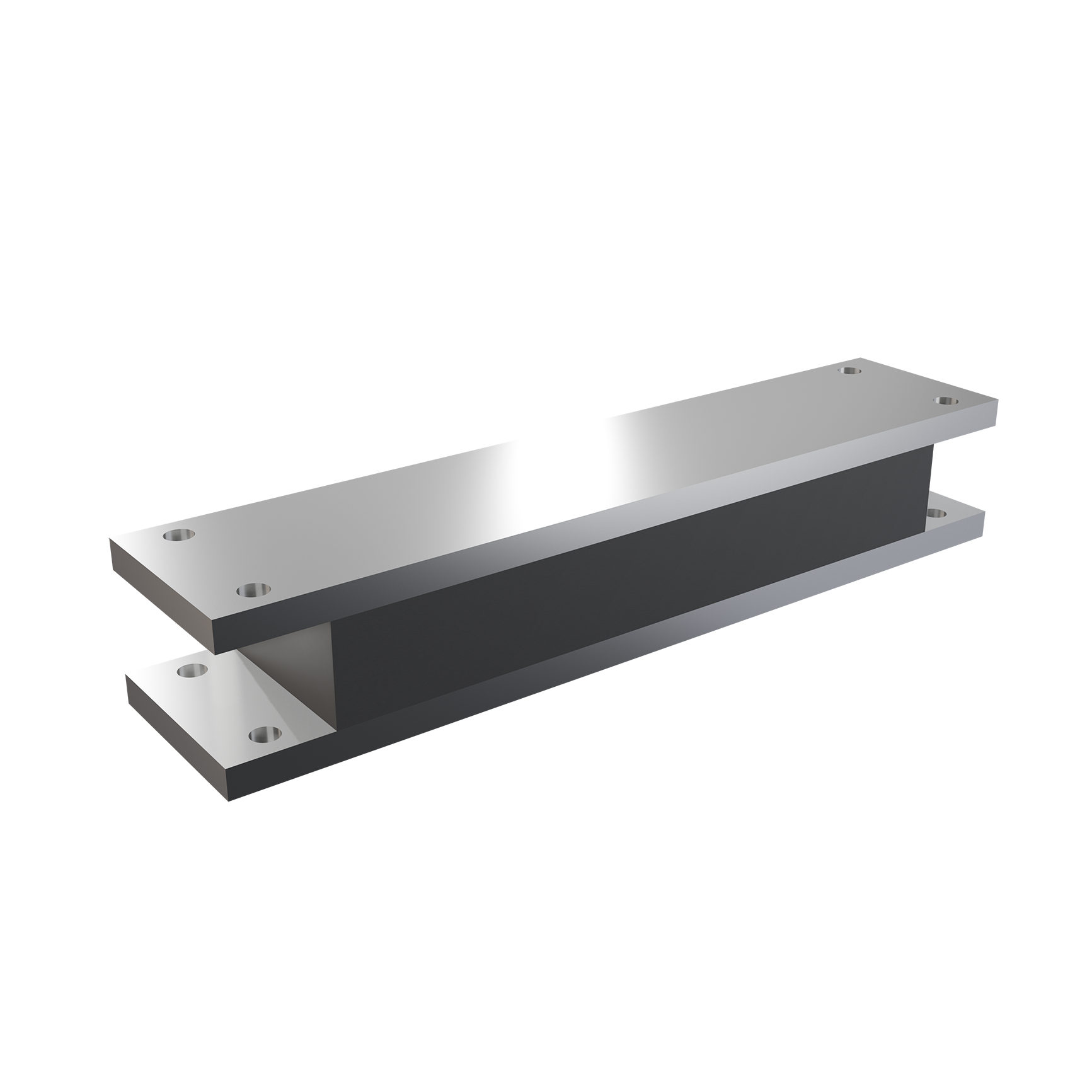
A rail-shaped rubber-metal element serves as an elastic drum bearing in construction machinery, such as rollers or compactors. It enables the absorption of high loads and decouples vibrations between the drum and the frame. It is primarily used in road rollers, tandem rollers, and soil compactors. There, it reduces peak impacts, protects frames and components from fatigue and ensures a more even load distribution during operation. The rail consists of load-bearing metal parts that are firmly connected to an elastomeric rubber body. While the metal provides a secure connection, the elastomer allows for controlled deformation to absorb static and dynamic forces. It is characterized by high load-bearing capacity, effective damping and the ability to compensate for tolerances. In addition, it reduces noise, improves running smoothness and - thanks to its robust materials - is designed for long-lasting, low-maintenance use under harsh conditions.
Roller buffer
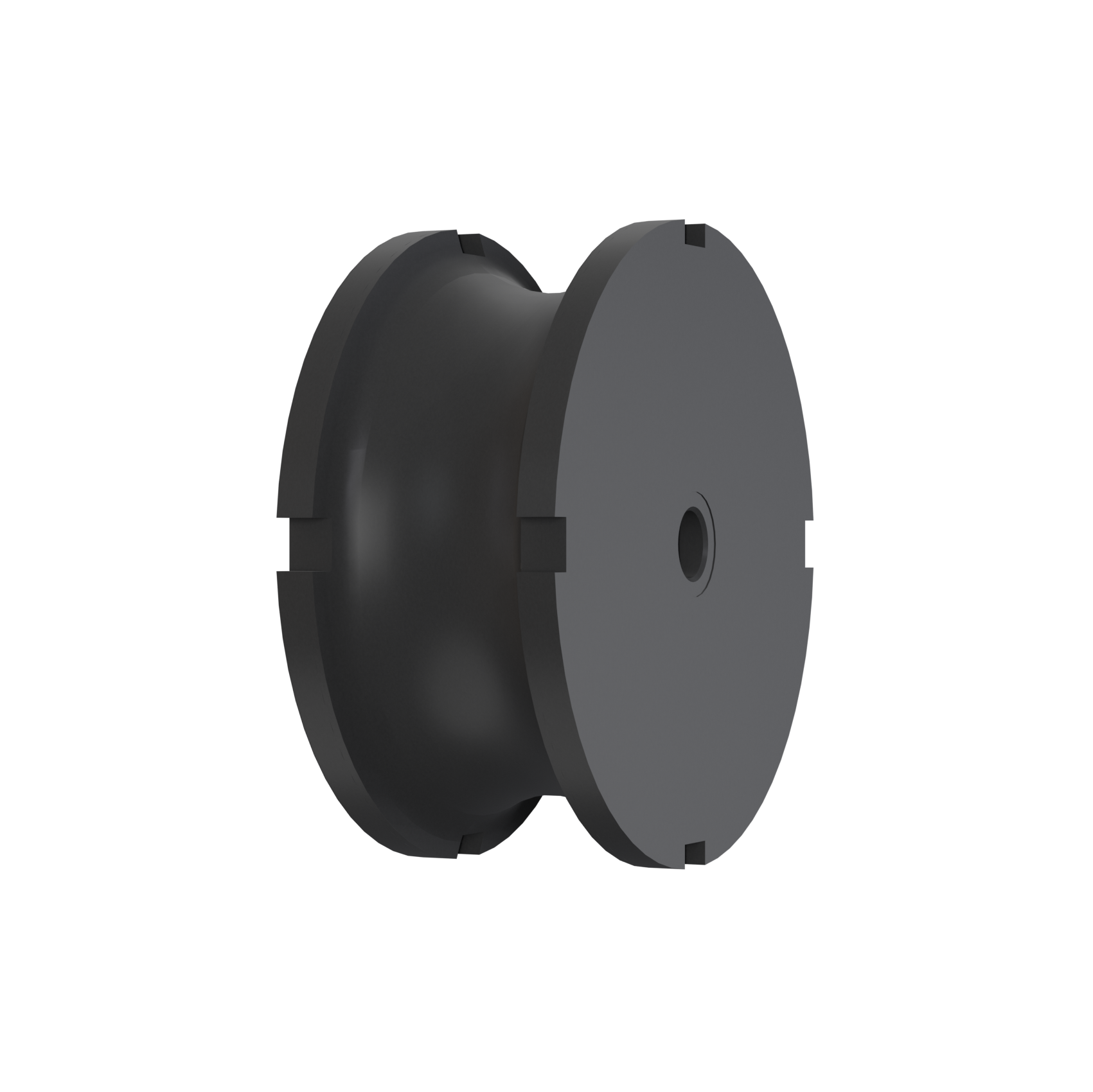
The rubber-and-metal roller buffer connects the roller drum to the machine frame and provides vibration isolation. This protects components and operators from vibrations, reduces wear and extends service life, while ensuring that compaction energy is efficiently transferred to the roller drum. It is used in construction machinery, particularly in road construction, civil engineering and earthmoving, where strong vibrations are utilized for compaction. In doing so, it efficiently transfers vibrations into the ground while simultaneously protecting the machine frame from stress. A roller buffer consists of a cylindrical elastomer core with permanently attached metal parts. Its properties are determined by its geometry, rubber hardness and installation orientation, enabling it to absorb compressive, shear and combined loads. It features a compact design, uniform force absorption and consistent vibration behavior. In addition, it is easy to install, durable and ensures efficient compaction and reliable operation thanks to its stable properties.